Born free in 1828 in Charleston, SC, to Martha Porter, James Ward Porter established a secret school for Black education before the Civil War. He came to Savannah in 1856 as a music director for an A.M.E church and established a music school where he gave lessons to both black and white students while also working as a tailor. Porter also kept a secret school for educating Black pupils, many of whom did their studies in the privacy of their homes. In 1865 Porter opened a school and published English Language for Beginners. He also preached at the Savannah Protestant Episcopal Church. James Ward Porter was elected a state representative in Georgia, representing Chatham County along with fellow Black assemblyman James M. Sims. Porter was the owner of a tailor’s shop in Savannah and was the wealthiest Black political leader in the state. He married Elizabeth. In the 1870 census, he is listed as owning $3,000 in real estate and $400 in personal property and living in Savannah with 4 children: John A. (15), Laura F. (13), James R.(11), Elizabeth M.(7.) In the 1870s Porter led a campaign against the segregation of Savannah streetcars and worked as an inspector of customers in Savannah. He was the first Black principal in Thomasville, GA, and a school principal in Yazoo, Mississippi.
Chatham County
James Merilus Simms-Chatham County
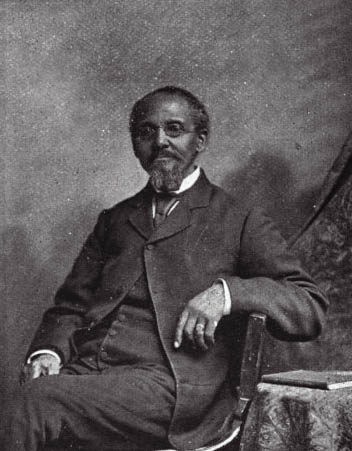
James Merilus Simms was born December 27, 1823, and enslaved at James Potter’s Coleraine Plantation, located upriver from Savannah, Georgia. It’s implied that he was the son of his enslaver, and learned to read and write from the tutor that Potter hired for his white children. In 1857, either Sims or his mother (accounts vary) purchased his freedom. He was baptized into the First African Baptist Church of Savannah, later expelled for lack of humility, and returned in 1858. By 1860, Sims had become an ordained minister and was operating a school for Black children in Savannah. Only six schools of this kind existed in antebellum Savannah, as educating Black people was considered a crime. Simms was the only teacher punished for this crime and was sentenced to a fine of $50 and fifteen lashes. Shortly thereafter, he moved to Boston, Massachusetts, where his younger brother had moved after escaping enslavement in 1851.
Simms joined the Union Army, serving as chaplain during the Civil War, and by the spring of 1865, he was back in Savannah. In 1867, he established the Southern Radical and Freedman’s Journal (later renamed the Freeman’s Standard). He also worked for the Freedmen’s Bureau and was a Union League organizer. Sims was one of the ministers to sign a petition protesting the treatment of Black soldiers in the Union Army and was an ardent supporter of voting rights.
He wrote The First Colored Baptist Church in North America, which entailed the history of First Bryan Baptist Church, and he is credited with establishing the first Prince Hall Masonic Lodge in Georgia. Simms was elected to the Georgia House of Representatives in 1868. After being expelled, he was reinstated in 1870 but subsequently lost re-election.
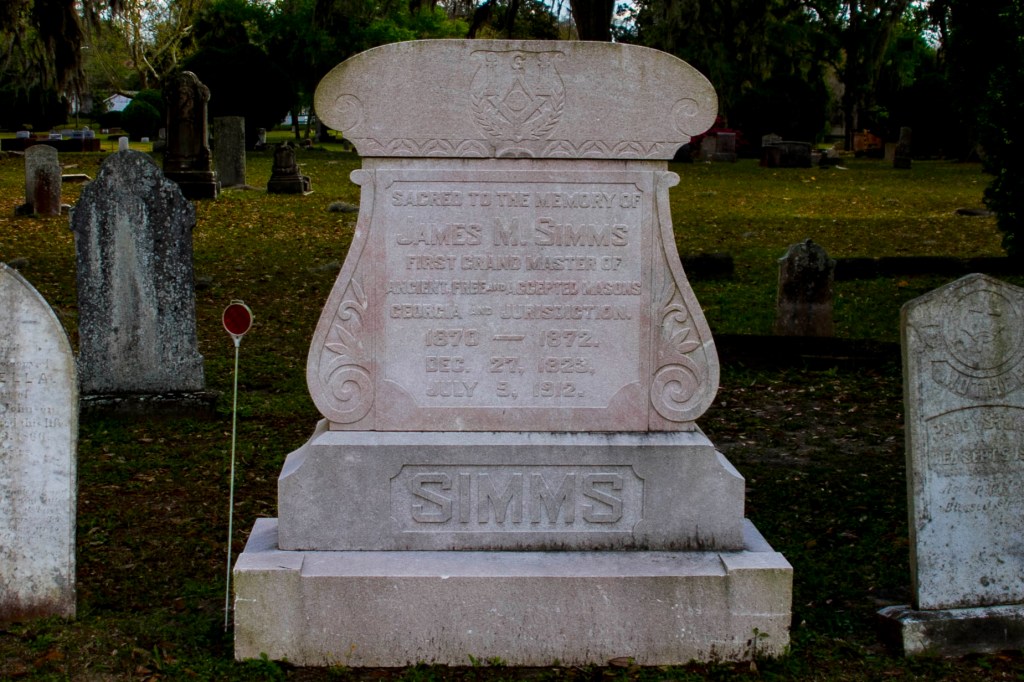
In one of Governor Rufus Bullock‘s last acts before he left office, he appointed James Simms, district judge of the First Senatorial District sitting in Savannah, the first Black judge in Georgia. New Democratic legislators moved the court out of the district. Afterward, Simms received a federal appointment as inspector at the U.S. Customs House in Savannah. He remained active as a senior statesman in the city’s African-American community until his death on July 9, 1912. The Most Worshipful Prince Hall Grand Lodge of Georgia placed a monument over Simms’ grave in Laurel Grove South Cemetery in June 1920.
Aaron Alpeoria Bradley – District 1
Aaron Alpeoria Bradley (c. 1815–1881) was a lawyer and civil rights activist in the United States. He was born into slavery on a Plantation in South Carolina around 1815 and was of mixed ethnicity. He escaped slavery, went North, and became a lawyer in Massachusetts in 1856. He was the third African American admitted to the Massachusetts Bar. At the end of the Civil War, Bradley moved to Savannah in 1865. He applied for the Georgia Bar but was denied admittance due to his race and controversial political activism against racial injustice. He became a lawyer in neighboring South Carolina and continued to practice law in Georgia without a license until 1875.
Bradley was elected as a representative to Georgia’s Constitutional Convention of 1867/68 and to the Georgia Assembly as one of 3 Senators. He represented District 1, which covered Chatham, Bryan and Effingham counties.
Bradley was a powerful orator and outspoken civil rights activist. He believed in the freedom of the Black race and championed all black causes. He is accredited as an early proponent of what would become the Black Power Movement, often calling for liberation and escalation of Black Americans in his speeches. He was also an anti-capitalist and held beliefs that predated the Populist Movement decades later. Bradley also pushed on shared social issues like the Homestead Acts, labor reform, end to debtors’ prison, which banded poor whites with many Black Georgians and fueled hatred among many white Georgians.
Bradley is buried at Greenwood Cemetery in St. Louis Missouri.
 The Original 33