George Linder-Laurens County

George Linder was born in 1834 in Laurens County, Georgia. While still enslaved, he founded Strawberry AME Church (pictured above) in 1859. At the conclusion of the Civil War, he attended the 1868 Georgia Constitutional Convention held in Atlanta. He represented the Sixteenth Election District. The convention lasted from December 1867 to March 1868. Required by the federal government, the convention created the new Georgia state constitution. Linder was elected to be a state representative. After being expelled, Linder was quoted saying, “Roust us from here, and we will roust you!”

In addition to being an AME pastor, Linder helped found two other AME churches in Laurens County. He was a successful farmer owning several hundred acres in the Buckeye District, just outside of Dublin, Georgia. He and his first wife, Peggy, had seven children. He had an additional ten children with his second wife, Mary. At some point, Linder moved his family from the farm into Dublin. The Linder family home still stands today.

Francis H. Fyall-Macon County

Francis Henry Fyall was one of 29 African American men that made up the House of Representatives of the General Assembly of Georgia, which first met on July 4, 1868. Twenty-five of these men were identifiable as Black, per the color of their skin, but four were racially ambiguous. Fyall was one of those four.

The first method of attack by hostile white legislators was to question each representative’s eligibility to serve the county. For Fyall, claims were made that he was a resident of Macon, Georgia, which was located in Bibb County, and not an actual resident of Macon County. In later testimony, Fyall explained that he had made a home in Macon County but was run out with threats of violence against him and his wife.

The second method of attack was to question Fyall’s race. By law, the white legislators had determined Black men ineligible to hold office. Twenty-five men were immediately removed, and a committee of five white men was formed to decide the fate of the four racially ambiguous. Fyall is called to testify, and he described his upbringing; the child of two white, Charleston French parents, his mother died when he was 6 years old. Another witness was brought to the stand and described Fyall’s mother as a mulatto woman and expressed he could find 100 more witnesses who would attest to the same. It was also described in the proceedings that Fyall was sold as a slave to a Mr. Habersham of Savannah, later enslaved by Dr. M.S. Thompson, and last, the property of Judge O.A. Lochrane.

They gave their determination on September 15th, stating: “they find the said F. H. Fyall to have more than one-eighth negro blood in his veins, and in accordance with the action of this House declaring the ineligibility of negroes to hold office under the Constitution of this State, respectfully offer the Following: Resolved, That F. H. Fyall is ineligible, under the Constitution, to a seat as a member of this body, and after the passage of this resolution, that his name be dropped from the roll.”

On September 18th, F.H. Fyall presented a motion, with the support of 14 white senators, 20 white Republicans, and 28 African American representatives, titled the “Memorial to the Members of the Legislature of Georgia and Others, Relative to the Illegal Organization of that Body Under the Reconstruction Acts.” The action did almost nothing to deter his fate of expulsion.

By April of 1869, he was put on trial for perjury, related to the false swearing that he lived in Macon County. That case was short-lived, as his claim was made orally and not written. Georgia Governor Rufus Bullock promoted Fyall to train hand on freight trains for the Western and Atlantic Railroad. In September of 1869, while traveling through a rock culvert at the crossing of East Tennessee and Georgia Railroad, he was knocked on the head by the culvert and killed. His corpse was sent “down the state road,” but information about his burial site has not been found.
Eli Barnes-Hancock County

Eli Barnes was elected as a representative to the Georgia Assembly as a Republican to represent Hancock County, Georgia. Unlike several of the Original 33, there is no Freedman’s Bureau Record to collect basic family information, so there is little known about Barnes. He testified to Congress about harassment and intimidation of Black people at the hands of the Ku Klux Klan. He told the congressional investigating committee, “It has got to be quite a common thing. . . to hear a man say, ‘They rode around my house last night, and they played the mischief there; my wife was molested, my daughter badly treated, and they played the wild generally with my family.’”

It has got to be quite a common thing. . . to hear a man say, ‘They rode around my house last night, and they played the mischief there; my wife was molested, my daughter badly treated, and they played the wild generally with my family.’

Condition of the Affairs of the Southern States testimony

Edwin Belcher-Wilkes County

Edwin Belcher was born on July 31, 1845 to his father and his slave enslaver, Robert E. Belcher and an unknown enslaved woman near Abbeville, SC. In an 1873 letter to abolitionist leader William Lloyd Garrison, Belcher wrote briefly of his parentage and early upbringing: “I am a Colored man, was born the Slave of my father in South Carolina in 1845. At an early age through the exertions of my mother I was sent to the North where I was attending school when the war Commenced in 1861.” At the start of the war, Belcher was just 16 years old, living in Philadelphia, PA and attending the all-white Pennsylvania High-School. He immediately enlisted the Union Army, leaving school to fight for the United States.

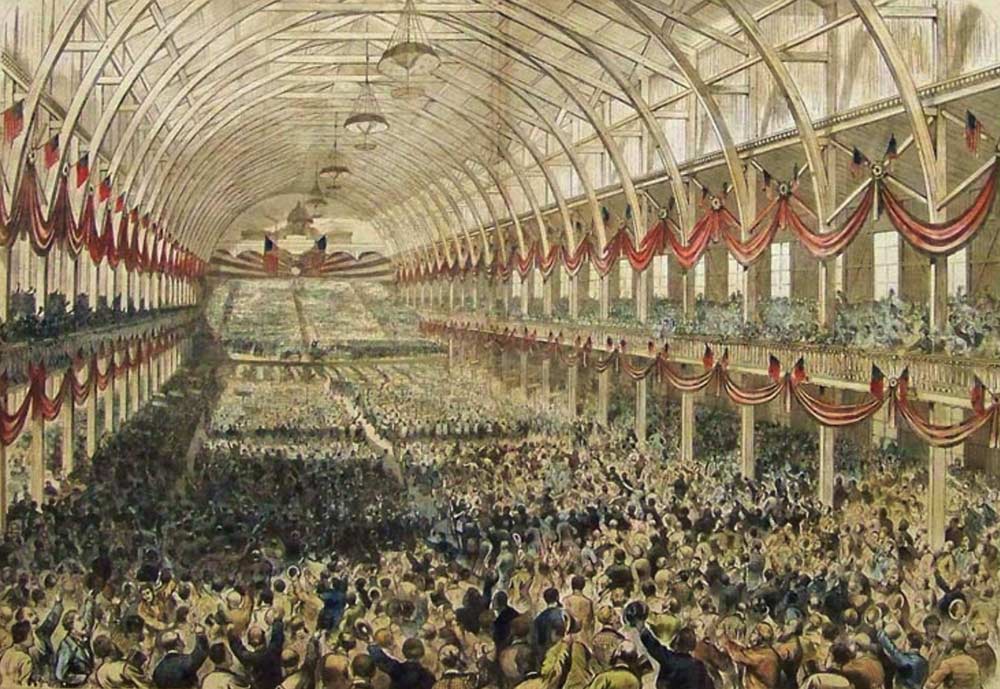
Belcher attended the 1876 Republican National Convention.

Because of his light complexion Belcher could pass for white. He rose through the ranks of the Union Army to a command position. When whites in Georgia learned he was Black he responded “My blood has dyed the soil of the Sunny South as deep as any other soldiers… My service during the war was just as acceptable as any other man’s and  was appreciated.” During the Civil War, Belcher was both imprisoned in a Confederate camp and suffered a blow to the skill which caused him to have seizures for the rest of his life. Belcher engaged in several battles during the Civil War, his last engagement was in Atlanta during Sherman’s March to the Sea. His father, Robert, rose to the rank of Colonel in the Confederate Army and commanded a Confederate regiment.   

After the Civil War, Belcher held several key positions for the U.S. Government and in Georgia politics. He was a revenue tax officer in Augusta, a Wilkes County representative for the 1868 Georgia Legislature and a member of the Georgia Constitutional Convention, also representing Wilkes County. Belcher was not expelled with his other colleagues in 1868 because he was so light skinned. In 1872, Belcher graduated from Howard University Law School (founded in 1868) and was one of the first graduates of Howard Law. He was admitted to the Washington D.C. bar following graduation. (His brother Eugene R. Belcher was also an early graduate of Howard University Law School.) Edwin Belcher also served as Macon, GA Postmaster and was working as a route agent between Atlanta and Augusta at the time of his death. Edwin Belcher married Ida and they had a 9-month infant named William S. Belcher (who would later go by Sumner) at the time of the 1870 census. 

Belcher died in Augusta, Georgia on January 7, 1883 at the age of 37 after a two-month long illness caused by typhoid-pneumonia. A special dispatch to the Chicago Tribune written in Atlanta, Georgia published Belcher’s obituary describing him as “without exception he was the most powerful debater and stump-speaker of his race in this section and probably in the South. His appearance was commanding, and his reputation as an orator was such like that of Bob Toombs, he never spoke to an empty seat.” Edwin Belcher’s death received national attention. News of his passing was published in the Chicago Tribune, The St. Louis Post-Dispatch, The St. Louis Globe-Democrat, Lewiston, Maine’s Sun-Journal, The Dayton Herald, The Savannah Morning News, and The Daily Chronicle of Knoxville, Tennessee. The Atlanta-based author concluded Belcher’s obituary saying, “His mother resides here.” Edwin Belcher is buried at Arlington National Cemetery in Arlington, Virginia.

Peter O’Neal-Baldwin County

Peter O’Neal was born around 1813. He attended the Georgia Educational Convention in Macon in May of 1867 along with many of his fellow future Assemblymen. He was elected to the Georgia House of Representatives in his mid 50s representing Baldwin County, home to Milledgeville, the capital of Georgia. In his time in the Assembly, he championed a bill to abolish the penitentiary system and another ensuring payment of wages due to agricultural laborers, most of whom were newly freed Black Georgians.

O’Neal continued to be a champion of labor rights for agricultural workers in the state beyond his time in the Assembly. In May 1887, a then elderly O’Neal hosted Hiram Hoover, a white Texan labor organizer, at his home in Milledgeville. Hoover gave two speeches to hundreds of Black agriculture workers, encouraging listeners to strike for a wage of $1.50, triple their customary compensation, and that they should organize. He issued a charter for his integrated union, Cooperative Workingmen, in Milledgeville and charged dues of 55 cents per person.

The local newspaper (and others throughout the country) picked up the story reporting Hiram Hoover was inciting violence among Black laborers and urging them to demand higher wages and “if what they demanded was not given then to use the torch to the white man’s house.” Whites retaliated against O’Neal, F.F. Boddie (a minister in the African Methodist Church) and Hoover. Hoover was shot while giving a speech at the black Methodist church on the outskirts of Milledgeville by several robed masked men who escaped on horseback and were never arrested. Hoover survived, but according to the June 2, 1887, Kansas Great Bend Register, the right side of his face was badly injured, and he lost an eye. No doctor in the vicinity would treat him.

On May 28, 1887, O’Neal and his family were preparing to move to Macon when a fire was set on their home. Mrs. O’Neal barely escaped.

At the time of the 1870 Census, O’Neal owned 300 in real estate and 100 in personal property. He was 57 and married to Mildred O’Neal, also 57, and they had two children living with them: Peter O’Neal, then 20, and Joel O’Neal, 17. His occupation is listed as “Rep. In Legislature.”