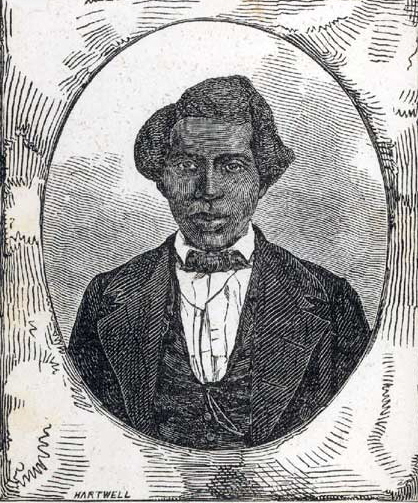
Born in Charleston, South Carolina, in 1833, Thomas Milton Allen was elected to represent Jasper County in 1868. Additionally, Allen testified about the actions of the Ku Klux Klan. He testified that two men came to his door right after he was expelled to intimidate him into voting for the Democrats of Jasper County at the next election.
In his testimony, he shared that men gathered in his yard on October 16, 1868, and demanded that he give them a light. Unable to find anything, his brother-in-law, Emanuel, offered to go outside to give the group of men a light. Emanuel was shot twice and bled to death.
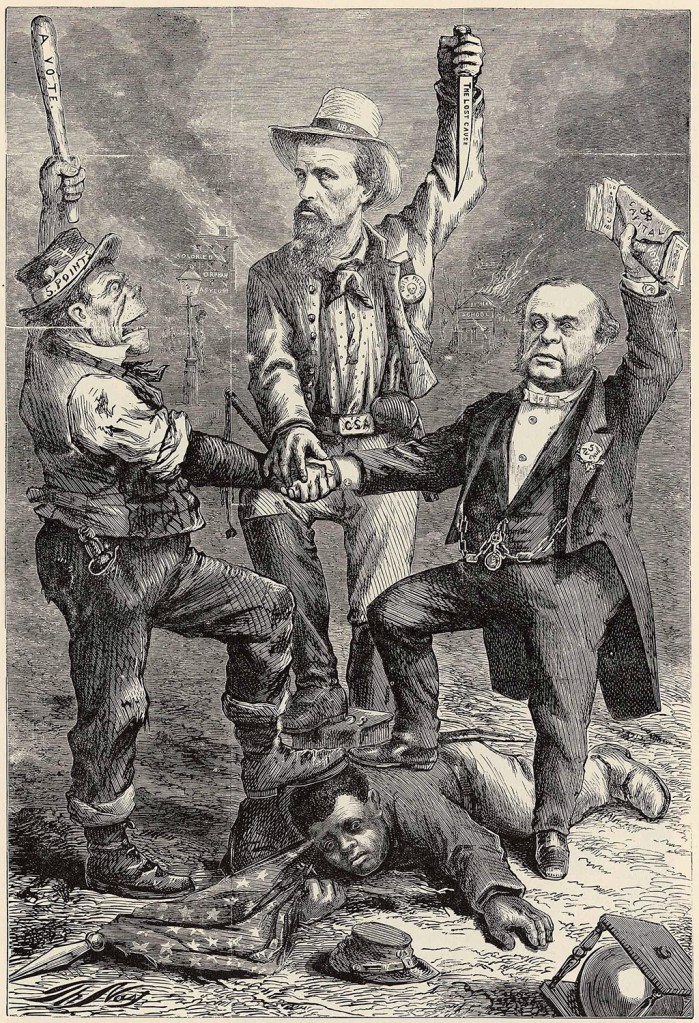
Allen also received a threatening letter from the Ku Klux Klan. The letter was threatening his life. While the letter was signed by the KKK, it said, “My word to you, Tom, is to stay home if you value your life, and not vote at all, and advise all of your race to do the same thing. You are marked and closely watched by K.K.K.
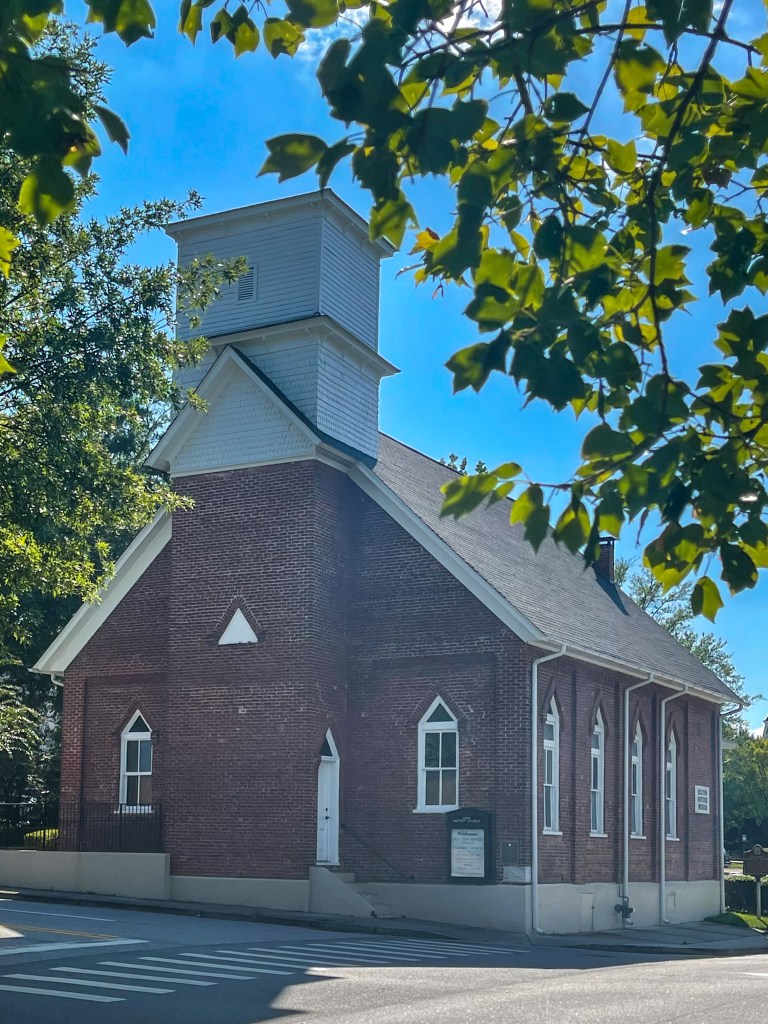
After these threats, his family decided to move permanently to Marietta, Georgia, where they had been spending some of their time. He was a founding member of Zion Baptist Church in Marietta, Georgia. He was selected to be the church’s second pastor, where he served from 1869 to 1885. He helped organize other churches in the Marietta area. He founded the first association for Black churches, called the Kennesaw Circuit. He died in 1909 and is buried in the Marietta City Cemetery.
Zion Baptist Church
Allen was married to Priscilla. According to the 1880 Census, they raised at least eight children in Marietta, Georgia.
Thomas Beard represented Richmond County, home to Augusta, Georgia, in the 1868 Georgia Assembly. Along with Henry M. Turner, Tunis Campbell Sr., and John T. Costin, Beard formed the Black Republican Party of Georgia around 1865. Education of newly freed Black Americans was a key mission of the organization. It stated that “Free Schools and churches are the guardians of civil and religious liberty.” Through their political party and other political work and activism, Beard and his colleagues campaigned for universal public education for all Georgians in the Georgia Assembly. After being reinstated to the Georgia Assembly in 1870, Beard and representative Edwin Belcher demanded the word “color” be removed from a public education bill, which could have paved the way to integrated schools in Georgia. The measure passed, however, with a separate but equal clause.
Beard married Caroline Jane Snowden of Charleston, SC. They had one son, James Randolph Beard. In the 1870 census, Thomas and Caroline are both listed as “mulatto,” an outdated and offensive racial classification for people with mixed African and European ancestry. (See here. ) In the census, Thomas is listed as working as a “Clerk In Revine Dept.” with his wife Caroline (27) and their 3 children, James Randolph, Celeste and and Eliza.Thomas Beard died in Augusta, Georgia, in 1918 at the age of 80. He and Caroline are buried at Cedar Grove Cemetery in Augusta, Georgia.
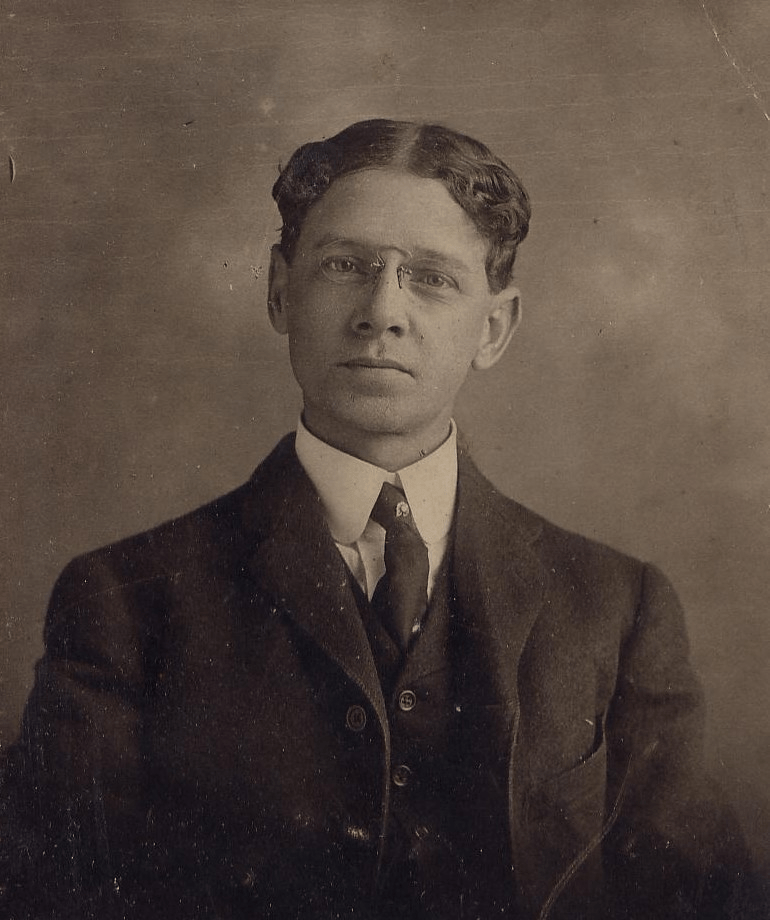
Their son, James Randolph Beard, is pictured below.
James Randolph Beard, Sr. January 1, 1894 (USPS Railway Mail Service Id)
Samuel Williams was born around 1820. He represented Harris County at the Georgia Constitutional Convention of 1867/68 and in the Georgia Assembly in 1868. He was married to Narcissa (or Narcissus) and had 2 children, Louisa and William. They lived in Hamilton, Georgia, the Harris County seat according to the 1870 Census since Samuel was 16 years old. Samuel is listed as having $200 in his personal estate and $200 in real estate with an occupation of “Rep Ligeslature [sic].” In 1874, Williams’s parents, Jourdan and Edie, are listed as also living with the family as well as Williams’s siblings Jourdan, Wesley, Elbot and Major. In 1880 Williams was 60/61 and Narcissa was 60. They still lived in Hamilton and Williams occupation is listed as a Blacksmith according to the census. Their daughter M.L Williams (23) is listed as living with them as well as grandchildren Lou (17) and Sam (10.)
Below is the Freedman’s Record for Samuel Williams from June 1, 1870. His was living Dekalb, County, GA, likely a few miles from the Georgia Capitol but his home county is listed as is Harris. Williams’s occupation is listed as “Blacksmith & Member of Legislature.” The census lists his two children, William and Louisa, as well as his siblings: four brothers “Jourdan, Wesley, Elbot and Major” and his 2 sisters, “Eelia” and “Esther.” Below the siblings reads the statement, “three brothers and sister dead.”
The census record shows Williams’s large family of three generations living in Dekalb county where he was serving in the legislature as well as the necessity of other employment while he served his county in the legislature.
Samuel Gardner represented Warren County, a rural county near Augusta. He was listed in the Georgia Weekly Telegraph as a local deacon at the Georgia Annual Conference of African M.E. Church held in Macon in March 1868. Gardner was removed from office along with the Black Republican legislators in 1869. An article published in the Atlanta Constitution on May 25,1869 lists Gardner as one of several Black assemblymen afraid to return to their homes in their elected counties due to threats of physical violence. Along with Gardner was Mr. Norris, Sheriff of Warren County.
In the 1870 census lists a Samuel Gardener, 52 (black,) working as a laborer and living in Atlanta Ward 2, Fulton, Georgia married to Leah Gardner, 38. They have 3 children, Roberts (17), Emma (16) and Nancy (12.) (See here.)
REFERENCES:
“People Who Are Afraid to Go Home.” Atlanta Constitution, May 25, 1868
“Georgia Annual Conference of African M.E. Church” The Georgia Weekly Telegraph March 20 1868 p. 4
Romulus Moore represented Columbia County in eastern Georgia in the 1868 Assembly. Columbia County was created in 1790 from neighboring Richmond County, home to Augusta. Fellow Original 33 representative, Thomas Beard, represented Richmond County just to the south.
Moore was born into slavery in Taliaferro County, Georgia in January 1818, which is located two counties west of Columbia County and holds the birth home of Alexander Stephens, vice president of the Confederacy. Moore grew up in the household of James Wellborn Moore and his wife Sarah and was educated alongside the white Moore children. Moore was a wealthy farmer who owned 10 enslaved people in 1840 with real estate holdings of $2500 in 1850.
Moore was a trained blacksmith as well as a Baptist minister, and he was able to purchase his own freedom years before the start of the Civil War. Moore married Mary Elenor Horton in 1860 and joined the First Baptist Church of Thomson, Georgia. In 1867, Moore was ordained to the gospel ministry by the Rev. Henry Johnson, of Augusta, GA, and accepted a position as pastor at the Poplar Head Baptist Church in Columbia County. That same year, Moore also entered politics as a federal registrar in 1867.
Like many of his fellow Black legislators, Moore served in the Constitutional Convention of 1868 and was active in various facets of Georgia politics. Moore believed in separatism and, in the 1870 Assembly proposed that newly freed Black Americans wouldn’t find justice living among whites and should move west to form their own community. His colleague, Tunis Campbell, who had belonged to and then fought against the American Colonization Society, an organization committed to Black resettlement in the Colony of Liberia, was ardently opposed to Moore’s recommendation. The Assembly delegates chose to not move forward with his emigration proposal and sent it back to committee.
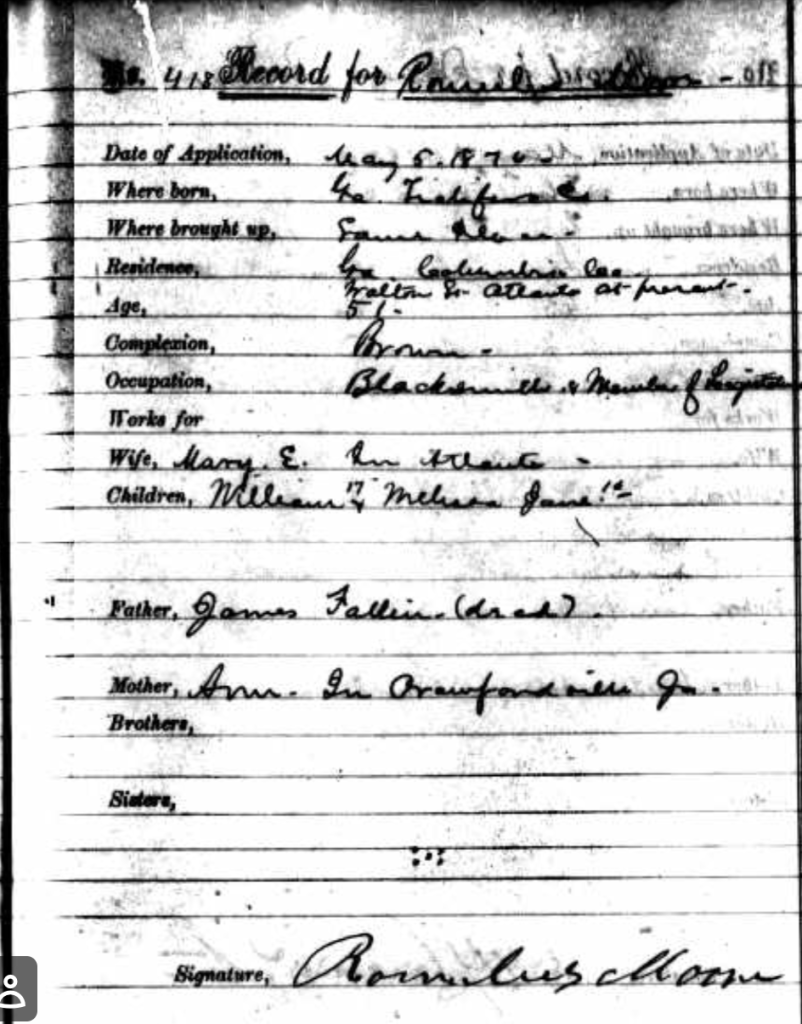
1870 Freedman’s Bureau Bank Records for Romulus Moore. While his residence is Columbia County, Georgia. Moore lived in Dekalb County like many Black assemblymen. His occupation is “Blacksmith & Member of Legislature” and his father is listed as James Fallin and Ann Moore. At the time, Moore is listed married to Mary E. Moore and has 2 children, William and Melissa Jane.
Romulus Moore remained a colleague and friend of Tunis Campbell during his 1875 indictment and arrest for the false imprisonment of Isaac Rafe, a white man whom Campbell charged with breaking into Black family homes and abusive behavior while Campbell was serving as Justice of the Peace in McIntosh County. Many White Georgians had been looking for an opportunity to arrest Campbell, given his power in Georgia Politics, and Campbell denied both charges and evidence. After his arrest while on his way from Milledgeville to a convict labor camp in the Dade County coal mines, Campbell was kept in custody for one night at the Fulton County jail. Romulus Moore, now a boarding housekeeper in Atlanta, hired W.F Wright and D. P. Hill to represent Campbell and secure a writ of habeas corpus. Campbell appeared before Judge Pittman in Fulton County and denied his lawyer’s requests to change the venue of his case to the U.S. Superior Court. Campbell did end up spending 1-year sentences to hard labor and, upon his release, left Georgia for New York.
In 1874, Moore attended the Colored Convention as one of approximately 60 delegates. He continued to support Black emigration from Georgia to the West to find freedom and equality in Black settlements along with his former Assemblyman colleague, Reverend Henry McNeal Turner. Turner supported Black emigration out of Georgia, but even further than the western states (Texas, Louisiana, Arkansas) that Moore suggested: “Whatever the condition of the negro to the other states, it will ultimately be his condition in Georgia. Providence is shaping their destiny and not blind chance. They are not to be more in one state than another.” He proposed the US Government give freed Black Americans a colony in New Mexico accompanied by “transportation and rations for size months.” This would enable Black Americans to establish their own communities and “get credit for what they did.” Turner ultimately supported a return to Africa, which would be the only way he saw for Black Americans to have free and independent lives. Turner founded the Migration Society and organized two ships with 500 emigrants to travel to Liberia in the mid-1890s.
Moore passed away at his home in Georgia sometime before 1888. In addition to being one of the founding fathers of the 1865-1896 Civil Rights movement, Moore was one of the founding leaders of the Black Baptist Church in Georgia, which is the largest African-American religious group in the state.
Robert Lumpkin was born enslaved in Virginia. He lived in Georgia for 50 years, with his last enslaver being Mrs. Phil Cook. After the Civil War, he was freed and elected to the Georgia Assembly from Macon County. Located in South Central Georgia, Macon County is home to Oglethorpe and Andersonville, Georgia, where 13,000 Union soldiers died as prisoners of war during the Civil War.
Like the other Original 33, Lumpkin was elected in 1868, expelled, and reseated in 1870, but he died of pneumonia one month after being reseated in February 1870. In that year’s census, his widow’s possessions are listed at $400 in real estate and $432 in personal property. He is buried in a segregated, Black cemetery in Oglethorpe, Georgia. The inscription on his grave reads: “ Hon. Robert Lumpkin, died Feb. 17, 1870. Sail on, Oh ship of state; sail on.”
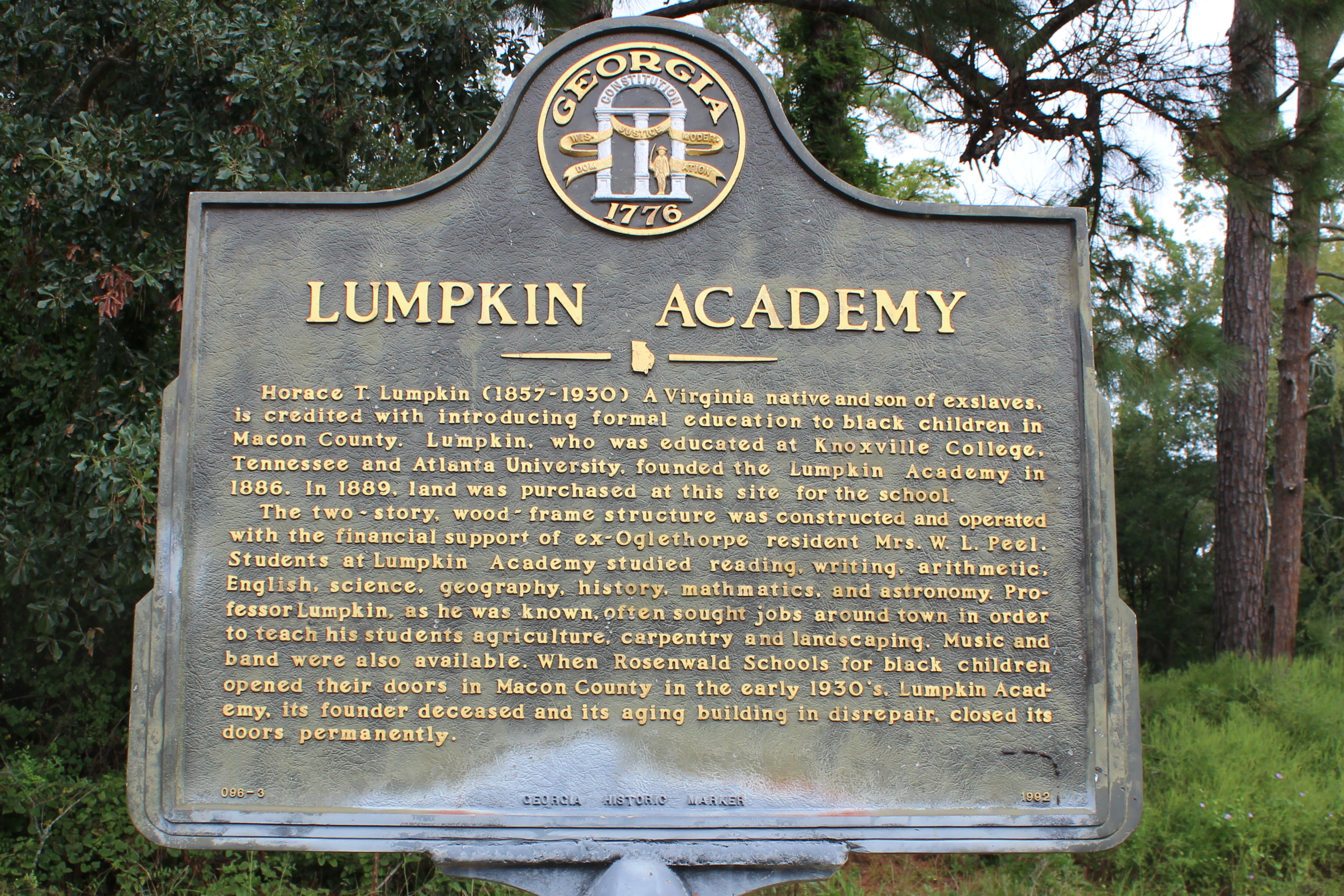
Lumpkin’s son, Horace (1857-1930), was also born into slavery and founded Lumpkin Academy in 1886, the first school for formal education in Macon County for Black students. Horace went to Knoxville College, Tennessee, and Atlanta University. Students at Lumpkin Academy studied reading, writing, arithmetic, English, science, geography, history, mathematics, and astronomy.
According to the Historical Marker Database: “Professor Lumpkin, as he was known, often sought jobs around town in order to teach his students agriculture, carpentry and landscaping. Music and bands were also available. When Rosenwald Schools for black children opened their doors in Macon County in the early 1930s. Lumpkin Academy, its founder deceased, and its aging building in disrepair closed its doors permanently.”
Philip Joiner (1835-c.1876) was born in Mecklenburg, Virginia, and came to Georgia after being sold in the 1850s. He lived enslaved in Dougherty County prior to the end of the Civil War. Joiner became president of the Union League, a pro-union organization, and was a delegate to the 1867 Georgia Constitutional Convention and an elected representative to the 1868 Georgia Assembly. He represented Dougherty County and lived in Albany, Georgia.
After being expelled from the Assembly, Joiner led a march from Albany, Georgia, to Camilla, Georgia, in protest of the expulsion. Participants in the march were shot at and attacked in Camilla at the Mitchell County Courthouse despite their peaceful intentions when a drunken resident, James Johns, began firing into the bandwagon that accompanied them. A mob began an assault on the marchers, including by the town’s sheriff, who formed a posse to hunt down the freedmen. Joiner was shot in the attack. Joiner testified on the event to the Freedmen’s Bureau as many Black Georgians were killed and wounded in the attack, which is now known as the Camillia Massacre. He also argued that the military had been ineffectual in protecting freedmen and requested that land be set aside in the West for Black settlers. A similar request was made by separatist Georgia Assemblyman Romulus Moore.
Camilla Massacre as depicted in Harper’s Weekly magazine.
In addition to being an assemblyman, Joiner worked as a carpenter and lived in Albany, Georgia, with his wife, Henriette, and their daughters, Mary Jane (5) and Lucy Ann (10), according to the 1870 census. His real estate was valued at $2000, and his occupation was listed as “Representative In Labor Legislator.” His mother, Lucy Parker, also lived with the family.
REFERENCES:
Foner, Eric. Freedom’s Lawmakers. LSU Press, 1996. p 120
Monday Floyd was born into slavery in Greene County in 1809 and worked as a house carpenter after the war. Because enslaved people were not permitted to learn to read and write, Floyd entered the Georgia Assembly, confessing he could read only “a little.” Many legislators derided Floyd and other elected freedmen, such as Eli Barnes, a mechanic, for their lack of literacy and education. Prominent minister and representative Henry M. Turner, scolded their detractors in the Assembly, saying, “These gentlemen do not consider for a moment the dreadful hardships which these people have endured, and especially those who in any way endeavored to acquire an education.” Turner and other Black Republicans saw Floyd as an example of the need for public education for newly freed Black Georgians, which became a cornerstone mission for many Black politicians.
Floyd was elected to two terms in the Georgia Assembly. Monday was one of several of the Original 33 that received death threats following their election to public office and their 1870 reinstatement. In 1871 Monday testified before the U.S. Congress on the threats he had received, including a letter from the Ku Klux Klan:
You are requested to resign Your place in the Legislature and retire to private life. We think it the best thing You can do under the present state of affairs. And we hop will comply without further trouble and save us from being provoked to put a dire threat into execution… for we swear by the powers of both Light and Darkness that no other Negro shall ever enter the Legislative Halls of the South. Sir, a word wot the wise is sufficient. Heed, we beseech you, friendly advice, and take warning.
Haste, O Mondy, to be wise,
Stay not for the morrow’s sun.
K.K.K.
You are requested to resign Your place in the Legislature and retire to private life. We think it the best thing You can do under the present state of affairs. And we hop will comply without further trouble and save us from being provoked to put a dire threat into execution… for we swear by the powers of both Light and Darkness that no other Negro shall ever enter the Legislative Halls of the South. Sir, a word wot the wise is sufficient. Heed, we beseech you, friendly advice, and take warning.
From Monday Floyd’s testimony about the KKK
In December 1870, Floyd was threatened and shot in his home in Madison, Georgia, by the Ku Klux Klan. The Klan returned 3 days later, and Floyd left Madison for Atlanta. Floyd was not the only legislator to be threatened and attacked in the area. Abram Colby of Greene County was also violently beaten by a group of white men as well as Alfred Richardson, a Black legislator from Clarke County, just north of Greene County.
REFERENCES:
Drago, Edmund. Black Politicians and Reconstruction in Georgia: A Splendid Failure. UGA Press. 1992. p 38
Malcolm Claiborne (sometimes spelled Claiborn) (1838–July 25, 1870) was born in Lancaster County, South Carolina in 1838. He was elected to the Georgia Assembly representing Burke County along with Black assemblyman John Warren. Claiborne was removed from the legislature in September 1868 and allowed to take office again alongside the other 32 Black representatives in January 1870 after federal intervention.
Six months after taking his office, Claiborne was shot and killed on July 25, 1870 after a dispute with the messenger sent by the Georgia House, Moses Bentley, after a heated argument over pay of House pages as well as replacing a Black page with a white page. Bentley had been a black delegate of the 1867 Georgia Constitutional Convention.
Claiborne is believed to be buried in Oakland Cemetery in Atlanta, GA.
In 2023, Oakland Cemetery featured Malcolm Claiborne in their annual Capturing the Spirit tour.
REFERENCES: The New York Times (New York, New York) · 1 Aug 1870, Mon · Page 5
Edmund L. Drago (1992). Black Politicians and Reconstruction in Georgia: A Splendid Failure. University of Georgia Press. p. 67.
Foner, Eric (1993). Freedom’s Lawmakers: A Directory of Black Officeholders During Reconstruction. Oxford University Press. p. 46
Davis, Ren; Davis, Helen (2012). Atlanta’s Oakland Cemetery: An Illustrated History and Guide. University of Georgia Press. p. 158