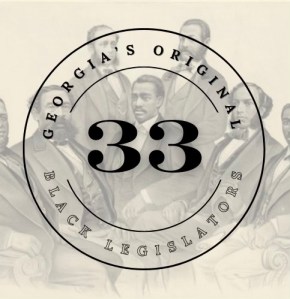
Sponsored by Representatives Gilliard, Mitchell, Lupton, and Jackson, House Bill 303 proposes that a monument in honor of the Original 33 be placed in a prominent position to honor the men expelled from their elected positions.
The Original 33
The Camilla Massacre-Mitchell County
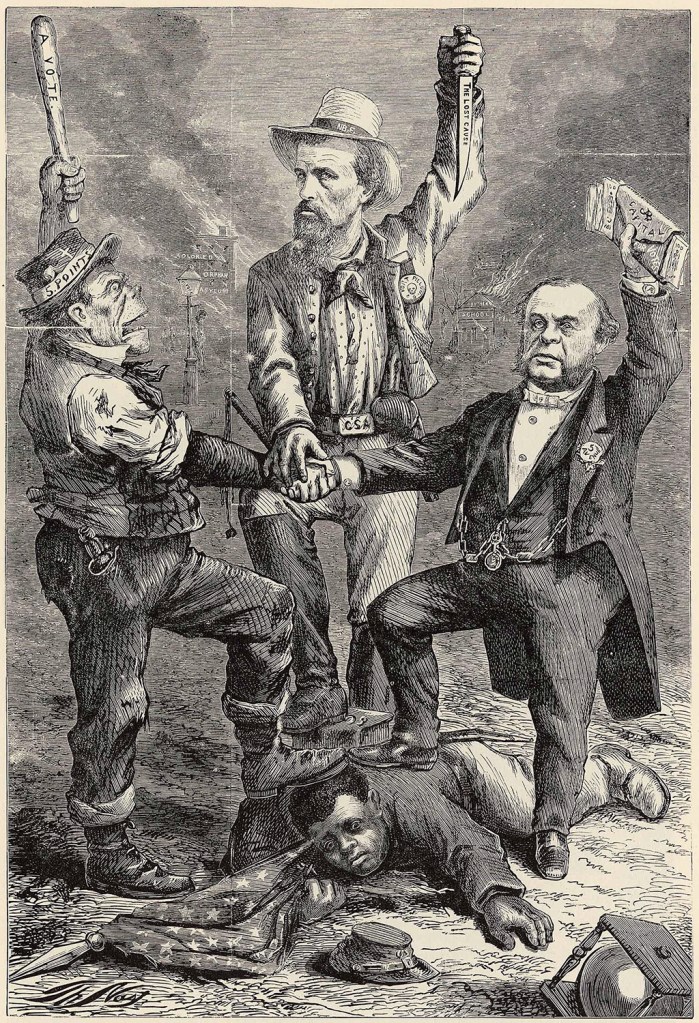
On Saturday, September 19, 1868, peaceful African-American marchers were threatened, beaten, tortured, and murdered in Camilla, Georgia, in what would become known as the Camilla Massacre. Over weeks of violence and terror, between nine and fifteen individuals lost their lives, and at least forty were wounded.
Leading up to the Massacre
The violence and killing by white Georgians during the Camilla Massacre was by no means an isolated occurrence despite some newspaper reports that cast the event as an anomaly. For the three years following the Civil War, white Georgians had attacked freedmen and republicans with little government intervention during Union occupation. This oversight perpetuated the strategy of enacting violence against Black activities as a legitimate strategy to keep former slaves in line with White Supremacy. While Black Georgians had earned the right to vote in Georgia’s 1868 Constitutional Convention passed the previous April, white Georgians used violence and quazi-clandestine organizations like the Ku Klux Klan to intimidate, suppress and disenfranchise African Americans in the ensuing months. Nonetheless, 33 Black Assemblymen persevered against threats of violence and voter intimidation and were elected to the Georgia House of Representatives and Senate only to be expelled from the Assembly by white legislators in early September 1868. Many events of white violence occurred at campaign events, Republican party events, and voter rights and registration events.
In protest of the unlawful expulsion, Black Assemblyman Philip Joiner (Rep- Dougherty County) led a 25-mile march from Albany to Camilla. This Mitchell County seat included several hundred Black Georgians (freemen) and a handful of white Georgians to attend a Republican political rally on the courthouse square. The violence that they met, while the largest in scale, was not uncommon in southwest Georgia at the time. These events demonstrated that during 1868, white citizens in southwest Georgia openly and frequently attacked freemen without repercussions. Repeated smaller attacks were met with no response from local authorities. Authorities refused to investigate, let alone prosecute, whites for attacking Black Georgians, further empowering the level, frequency, and brazenness of violence that whites could easily get away with.
Details of the Camilla Massacre
Black freedmen traveled from neighboring counties, including Dougherty, the most populous county of Black Georgians in southwest Georgia. Many were coming to hear Republicans William Pierce and John Murphy. Whites in the town, meanwhile, were preparing for a more violent set of events, with one telling a freedman, William Jones, that “he would bet a good deal that Murphy would not speak in Camilla that day.”
Participants in the march were shot at and attacked as they marched through Camilla towards the Mitchell County Courthouse despite their peaceful intentions. The violence began when a drunken resident, James Johns, began firing into the bandwagon that accompanied the marchers. A white mob then began an assault on the marchers, including the town’s sheriff, who formed a posse to hunt down the freedmen. Philip Joiner was shot in the attack.
The local sheriff and a white-only “citizens committee” in the majority-white town warned the Black and white activists that they would be met with violence and demanded that they surrender their guns. In 19th-century Georgia, carrying weapons was legal and customary for Black and white residents. Marchers refused to give up their guns and continued to the courthouse square, where a group of local whites, quickly deputized by the sheriff, fired upon them. The deputized group of private citizens was by no means uncommon in many violent events against Black Georgians. Vigilance committees were common occurrences as groups of private citizens took it upon themselves to administer law and order through violence. In many cases, local officials and even the U.S. military ignored these violent forms of vigilantism, which were little more than a structured version of a lynch mob.
This Camilla mob’s assault forced the marchers to retreat into the surrounding swamps as locals hunted them down and killed between nine and fifteen Black marchers, wounding forty others. Nicholas Johnson writes of the massacre that “Whites proceeded through the countryside over the next two weeks, beating and warning Negroes that they would be killed if they tried to vote in the coming election.” (Negros and the Gun: The Black Tradition of Arms, p 90-92.)
Ramifications
Following the massacre, U.S. Army officer O. H. Howard, the Sub-Assistant Commissioner for the Freedmen’s Bureau in Albany, dispatched a physician to Camilla to attend to the wounded while scores of others came to the Freedman Bureau’s office in Albany. In a letter to Col. John Randolph Lewis, Howard wrote:
Col.
I hurry Mr Schlotfeldt off with the fullest accounts I can command of the affair at Camilla, I believe the account I send you, to be correct without any exaggeration.
I wished to come up myself, but I dare not leave the freedmen here to themselves. If any one can prevent them from going to Camilla en masse I can do it, therefore, I remain here.
Unless vigorous measures are instituted, and troops are stationed here for the protection of all parties, there will be much bloodshed. I cannot restrain the people.
It will be useless for me to attempt to block the way of thousands, for any length of time, I must protect my family and let the contending parties fight it out.
It is coming
I have sent the Doctor to attend to the wounded.
Respy & Truly Yours
O. H. Howard
The letter highlights the brutal circumstances of the massacre as well as the officer’s concern that with tensions high the freedmen themselves may rise up to seek vengance against the white vigilantes in Camilla, Georgia. (See original text.)
The Camilla massacre led to extended military occupation in Georgia, Congressional testimony and an affidavit by Assemblyman Philip Joiner on September 23, 1868. ( See original text.) However, little was done to change the prosecution of whites perpetuating political and racial violence against freedmen. The Freedmen’s Bureau conducted an investigation and others in the Army also conducted investigations confirming that Black Georgians did not intend to cause violence in Camilla but simply were there to attend the Republicans’ speeches. At no point after the event or the investigation did the U.S. Army dispatch any troops to Camilla to further investigate or prosecute perpetrators. Local Camilla authorities also took no action to investigate or arrest any individuals in the incident. The Camilla courthouse itself mysteriously burned down months after the massacre destroying the county’s records. (Warren Royal and Diane Dixon, Camilla (Charleston: Arcadia Publishing, 2008), 14)
National newspaper coverage highlighted the political and racial tensions of the incident and in one case called it an assault on free speech. However, the actual events were often confused as editors took their own editorial license in coverage based on their region in the country and their readership.
Despite the large Black demographic in southwest Georgia counties, the 1868 vote went to a Democratic victory as poll workers in Dougherty county for example, stuffed republican ballots into their pockets and conducted other means of voter fraud to assure a Democratic win. The campaign violence and election fraud perpetrated by white Georgians did end up achieving their desired result.
Camilla was one of many acts of political violence in the Reconstruction South and was certainly not the last one. Other riots and acts of election violence occurred in Mobile (August 1869), Baton Rouge (November 1870), Macon (October 1872), and in Colfax, Louisiana (Easter Sunday, 1873) when an armed band of Klansman entered the town, attacking and murdering Blacks. Political violence continued through the mid-1870s as white Southerners continued to use effective violence to suppress Black voters and Black political candidates.
Public Acknowledgement of “The Camilla Massacre:”
It wasn’t until 1998 that The Camilla Massacre became part of Georgia’s history. Camilla residents publicly acknowledged and commemorated the massacre on September 19, 1998, 130 later.
Special acknowledgment to Joshua William Butler for their thesis written about the Camilla Massacre. Titled “Almost Too Terrible to Believe”: The Camilla, Georgia, Race Riot and Massacre, September 1868, it can be read here.
Director Mamie Hillman on Abram Colby, One of The Original 33
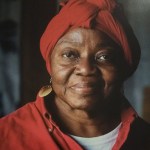
Many years ago, while researching Greene County, Georgia’s African American Historical Narrative, I discovered Abram Colby. From childhood to adulthood I always desired to know how I became a part of my community’s historical narrative. When I discovered Abram Colby, this began an unearthing and à feeling of ownership in this place. Abram Colby enslaved on the plantation of John Colby (Abram’s biological father) to a sixteen-year-old enslaved girl in Penfield, Georgia, around 1820. John Colby was one of Greene County’s wealthiest plantation owners. Although Abram’s experiences were that of enslavement. He esteemed to greatness with a clarity of heart and mind to serve others. He became a minister, barber, and Greene County’s first African American to be elected to the Georgia Legislature in 1868. This was a time of supposed change, betterment, and new beginnings for communities and the state of Georgia. However, it was a time of violence, horrific systematic racism, and engagements. When only, Representative Abram Colby desired to serve his community and its people. Such a viable, phenomenal and committed leader. It is my hope that our community, its citizens, and the state of Georgia will acknowledge, honor, and celebrate the lives of Georgia’s First African American Legislators.
William Golden-Liberty County
William Golden/Golding was born between 1809 and 1813 in Liberty County, GA, and was enslaved by Charles Colcock Jones. He was a leader in the slave community as an ordained Congregational Minister. He worked for the Freedmen’s Bureau after the Civil War and was active in the Georgia labor movement, attending the 1869 Georgia Labor Convention.
When expelled from the Georgia Assembly in 1868, Golden “stormed out of a committee meeting, promising that the blacks would hold their seats at the point of a bayonet of necessary” (Drago, 52)
He was reinstated to the Georgia Assembly in 1870 and served 4 terms. Because Golden was enslaved for the majority of his life, he was only able to read and write a little like some of his other formerly enslaved elected colleagues. Because of this, Golden worked to further education for Black students. He established Golden’s School in 1866 in Midway, Georgia, on land deeded to him. The school was expanded from a small schoolhouse and became Dorchester Academy in 1872. Equipped with a campus farm, the students and staff raised and sold livestock, eggs, and chickens to pay operational expenses.
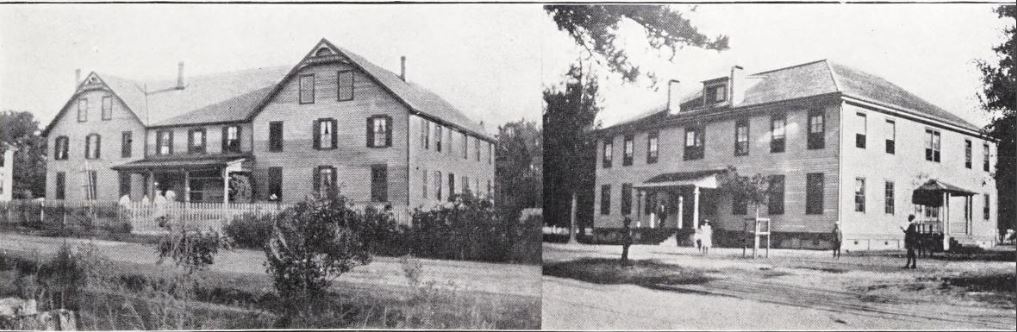
The school transitioned into a center for civil rights in the 20th century. Dr. Martin Luther King, Dr. Ralph Abernathy, Andrew Young, and Dr. Fred Shuttlesworth prepared the March on Birmingham at the school. The school is listed on the National Register of Historic Places and is a featured stop on the U.S. Civil Rights Trail in Georgia.
Golden died in Liberty County, Georgia.
William Guilford-Upson County
William A. Guilford (February 5, 1844 – October 1909) was a barber and state legislator from Upson County, Georgia. Guilford was a representative of Georgia’s constitutional congress in 1868 and was an elected representative in Georgia’s assembly during the 1868–1870 term. A Republican, he helped found the Republican Party in Upson County. He organized the Upson County’s Emancipation Celebration, which still occurs on or near May 19th.
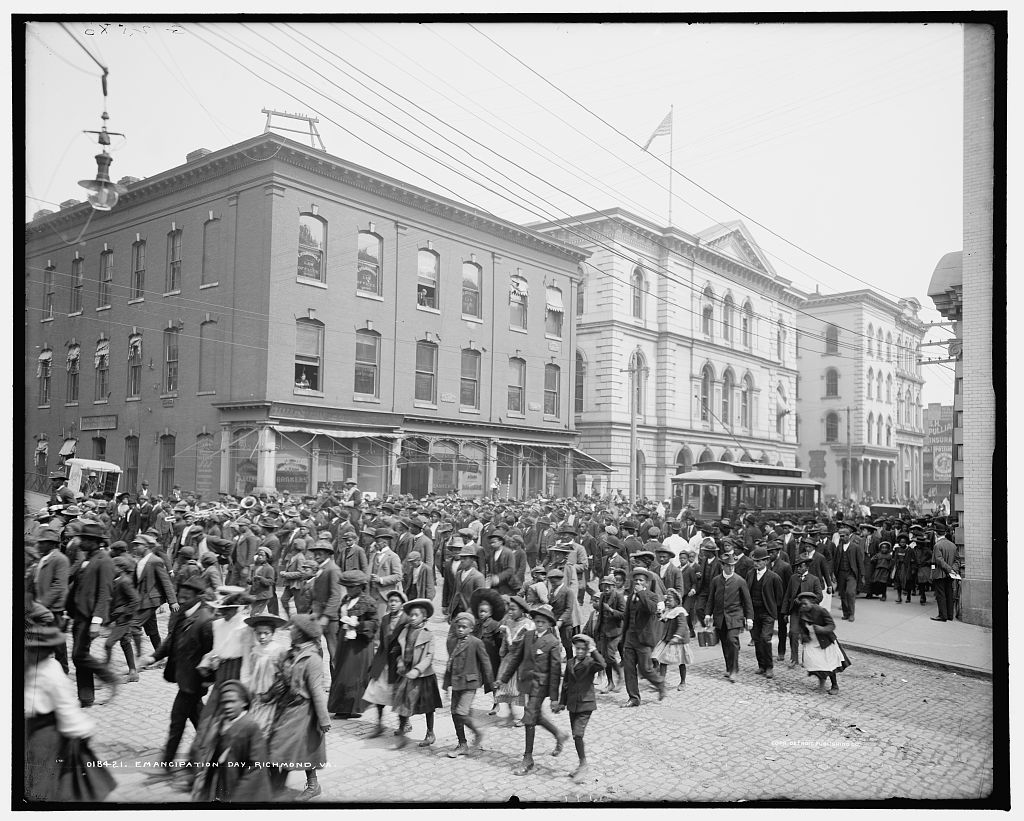
William Guilford’s father, Guilford Speer, operated a harness and shoe shop in Thomaston, dating back to the 1840s. Guilford was also a founding organizer of St. Mary’s A.M.E. Church. Guilford and his wife, Lourinda, had at least 8 children including William (who died before 1870), Guilford, Duffield, Lincoln, Douglass, Richard, Ludie, Benjamin, and Lidie (Lydia). He owned 12 acres of land in Thomaston, Georgia. Guilford was one of several witnesses on behalf of political activist William Fincher of Pike County, who was accused of vagrancy in 1868. The case was submitted to the U.S. Congress as an example of a violation of Civil Rights. The jury sentenced Fincher to a year of hard labor on the public roads.
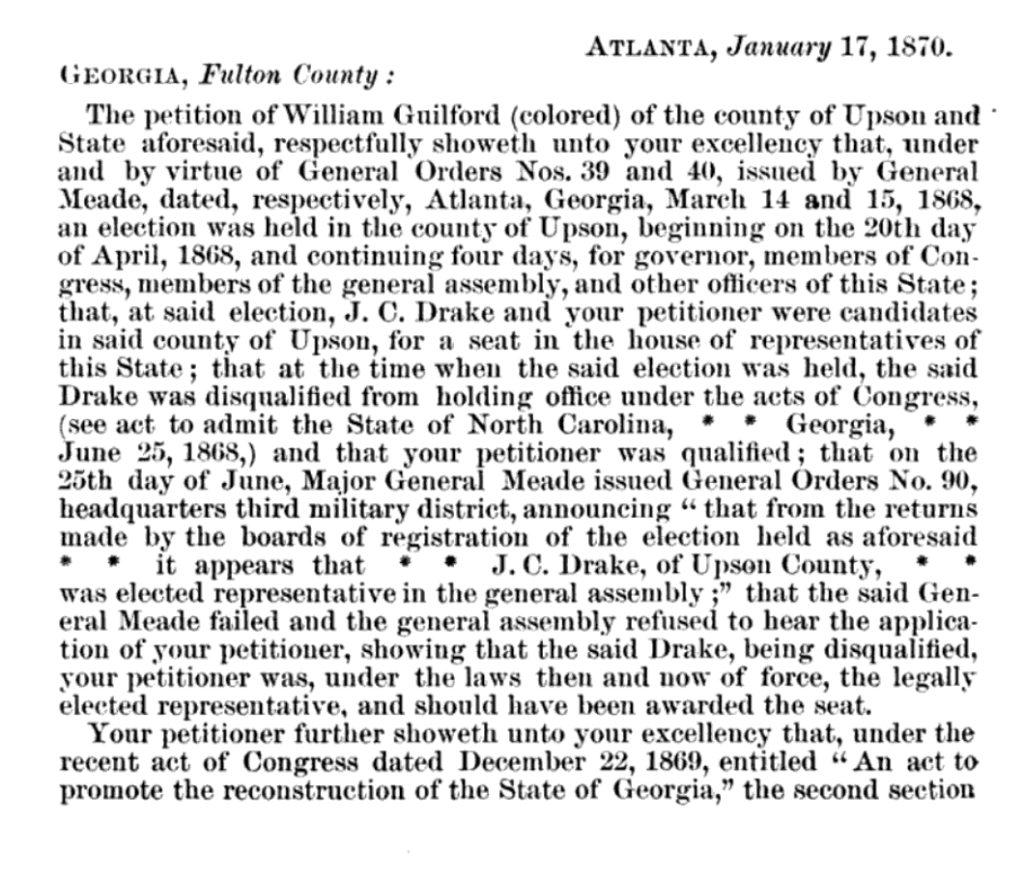
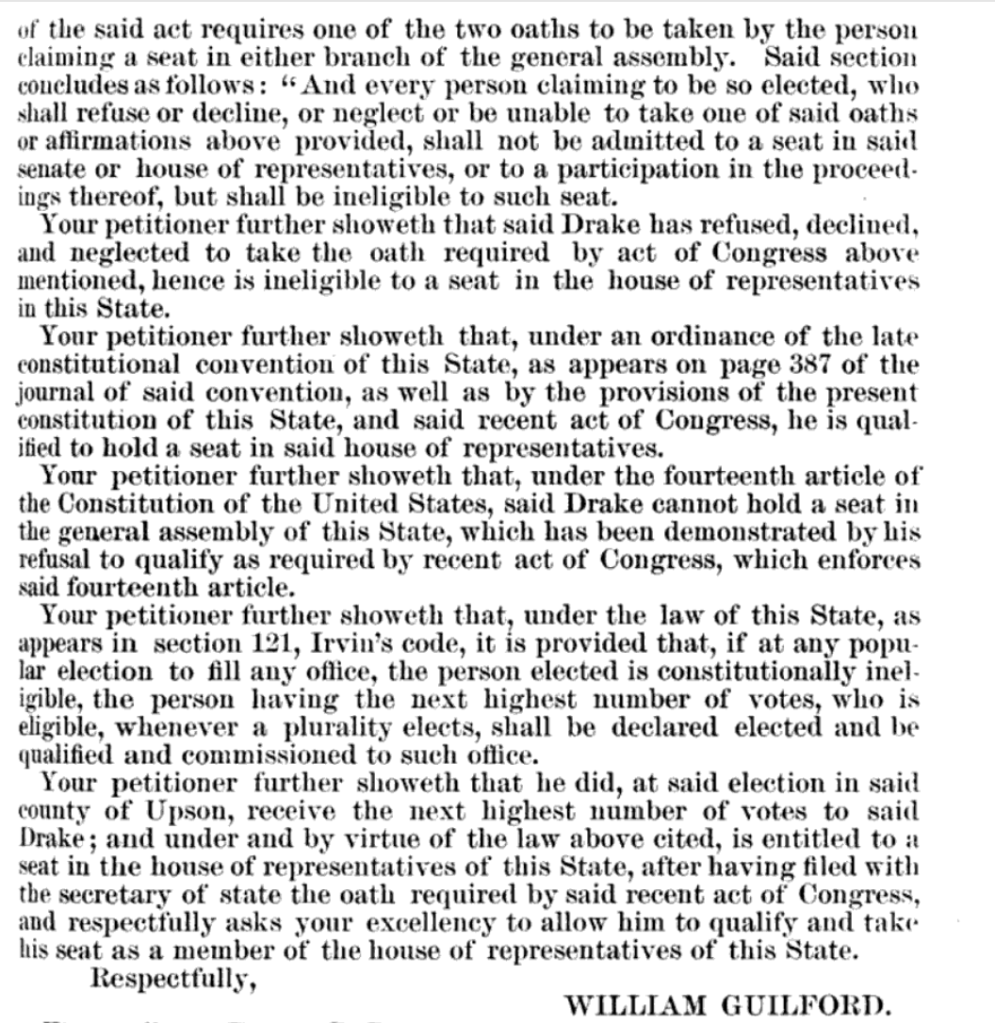
Below is William Guilford’s petition for reinstatement to the Georgia Assembly.
REFERENCES:
https://en.wikipedia.org/wiki/St._Mary_A.M.E._Church
https://en.wikipedia.org/wiki/William_Guilford
United States. Government Printing Office (1870). “Congressional Serial Set”. United States Congressional Serial Set (1406). U.S. Government Printing Office: 1–24. ISSN 1931-2822. Retrieved 2025-03-02.
Reverend Ulysses Houston-Bryan County
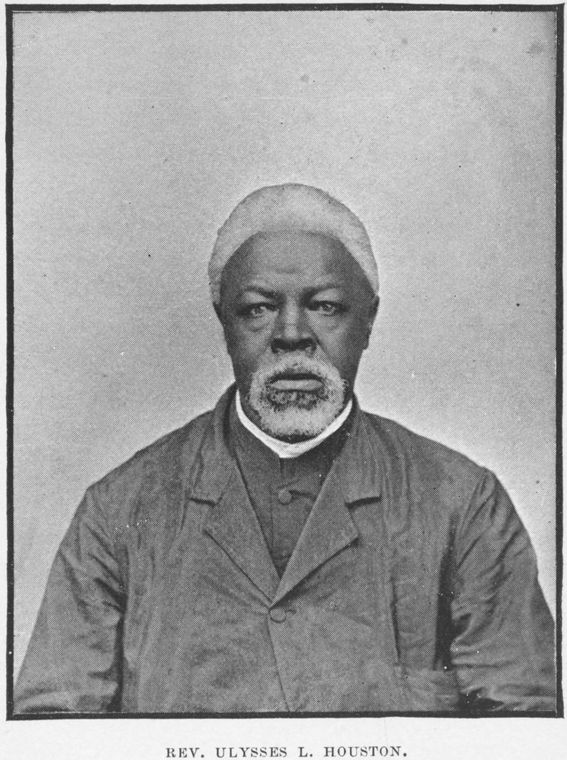
Ulysses L. Houston (1825-1889) was a pastor and state legislator in Georgia. Considered a leading citizen of the Black community in Savannah, he was elected to the Georgia State Legislature as a representative of Bryan County. Born into slavery in Grahamville, South Carolina, he moved with his enslaver, Moses Henderson, to serve in the Henderson home. Licensed to preach in 1855, he was the first member of the Third African Baptist Church, which is now the First Bryan Baptist Church in Savannah, Georgia. He then served as a pastor from 1861 until his passing in 1889. He was one of the church leaders who met with General Sherman in Savannah to discuss the future of the Black community in Savannah. In addition to his church leadership, he was a founding member of the fraternal lodge, Eureka Lodge, No. 1, A. F. and A. M. He also founded Houston Baptist Church in Port Wentworth.

Houston was married to Henrietta. They had four sons and one daughter. He was a respected man around the South. When he passed, over 7000 people attended his funeral. He is buried in Laurel Grove South Cemetery.
Tunis Campbell, Sr.-2nd District
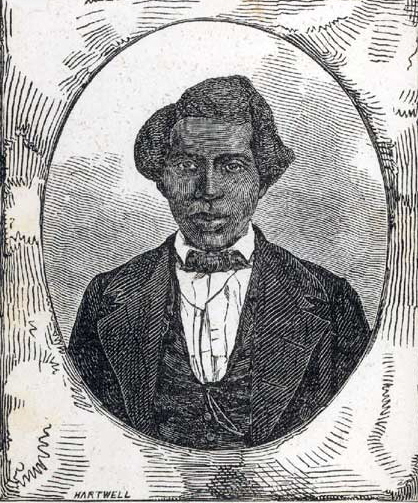
Called “the oldest and best-known clergyman in the African Methodist Church”, Tunis Gulic Campbell Sr. served as a Reverend, abolitionist activist, civil rights leader, Union Army chaplain, Military Governor, voter registration organizer, Justice of the Peace, delegate to the Georgia Constitutional Convention of 1867–1868, and was one of three Black Georgia state senators in the1868 Georgia General Assembly.
Campbell was born in Jersey City, NJ, and was one of 10 children born to John Campbell, a successful blacksmith and a free person of color, in Middlebrook, NJ. When Campbell was five, a white friend of the Campbell family placed Campbell in an all-white Episcopal school in Babylon, New York, where he attended school until the age of 18 as the only person of color in the school. In his teens, Campbell trained to be a missionary to Liberia through the American Colonization Society, but he grew to oppose the ACS and their stance to resettle Black Americans in West Africa. By 18, Campbell had become an anti-colonization and abolitionist lecturer preaching against slavery and colonization and often joined Frederick Douglass on speaking tours.
During Reconstruction, Campbell worked with the Federal Government in Union-occupied Georgia to help rebuild Georgia’s newly freed Black communities after the abolition of slavery. Soon after Congress established Freedman’s Bureau in 1865, Campbell was appointed to supervise land claims and the resettlement of newly freed people on five Georgia Sea Islands: Ossabaw, Delaware, Colonels, St. Catherine’s, and Sapelo. He settled in McIntosh County along Georgia’s coast and worked to empower the newly freed slaves by promoting education, land ownership, economic opportunities, and political participation. As Bureau Agent and Military Governor to the Sea Islands, Campbell played a key role in assisting Black Americans in coastal Georgia during their transition from slavery to freedom and helped many gain education through newly established Black schools in the area as well as acquire land to start their own farms.
Campbell was a delegate during the Georgia State Constitutional Convention of 1867-68 and served as Senator for the Second Senatorial District, which included Liberty, McIntosh, and Tattnall counties in the Georgia Assembly. As a senator, Campbell served on the Senate’s Petitions and General Education committees. He introduced 15 bills promoting civil rights for Black Georgians in equal education, integrated court juries, homestead exemptions, elimination of imprisonment for debt, full access for Black Georgians to public facilities, and fair voting procedures.
Along with 32 other Black Georgia representatives, Campbell was expelled from the General Assembly in September 1868 under the false claim that while Black Georgians had the right to vote, the Georgia constitution prohibited Black Americans from holding office. Campbell immediately protested the resolution and was one of the loudest speakers defending Black eligibility to hold office, his speech on the topic appearing on the front page of the Atlanta Constitution. While expelled, Tunis continued to build his political presence in the Sea Islands and fight for civil rights, often amid violent threats by white supremacists and the Ku Klux Klan.
Campbell was reinstated in 1871 but lost his bid for re-election in 1872 due to efforts by his enemies to intimidate Black voters. He continued to serve as Justice of The Peace on St. Catherine’s Island, angering many who saw his role as having too much power for a Black official over white Georgians. He would be indicted on multiple trumped-up charges when he defended the rights of Black sailors on ships docked in Darien, Georgia, and was convicted and sentenced to one year of hard labor at a Georgia convict labor camp. Following his imprisonment, Campbell moved to Washington, DC, and continued his political activism. He also published a memoir, Sufferings of the Reverend T. G. Campbell and His Family in Georgia (1877).
Tunis Campbell Sr. died in Boston on December 4, 1891. In the early 2000s, the Gullah/Geechee Nation began holding the Tunis Campbell Celebration to honor the man who had led many formerly-enslaved coastal Georgians to political empowerment and economic prosperity.
A book was written about his life titled Freedom’s Shore: Tunis Campbell and the Georgia Freedmen. The rights to the book were purchased by Malcolm Jamal Warner.
William Henry Harrison-Hancock County
William Henry Harrison (September 1843-?) was in Sparta, Hancock County, Georgia, as Bill Thomas. His parents were Eliza and Harrison McLane. When his father passed away, he was enslaved at the age of 14 by Judge James Thomas, the father-in-law to Linton Stephens, the half-brother of Alexander Stephens, the vice president of the Confederacy. Harrison served as Thomas’s body servant, a person who served as a personal care attendant to their enslaver. While it was illegal to teach African Americans to read and write, it was known that Bill Thomas was literate.
There isn’t a lot known about Harrison. Still, it is known that he was part of an attempted insurrection on September 13, 1863, in Sparta, GA, when approximately 100 enslaved people gathered together in a wooded area east of Sparta, GA. Identified as one of the ringleaders of this attempt, his life was spared but not without punishment. Likely due to his relationship with the Thomas and Stephens families, he did escape execution by hanging. Also, due to his relationship with Thomas, it is believed he would have been present for many discussions about the Confederacy and the Civil War at Thomas’s home.
After the war, Bill Thomas changed his name to William Henry Harrison. Harrison was a delegate to the Constitutional Convention in 1868 and was elected state representative for Hancock County alongside Eli Barnes. In 1872, he testified to Congress on the activities of the Ku Klux Klan in Hancock County. At this time, he shared that he would have to stay up late to guard his land from the KKK, and he often received threatening letters from them.
Members of Harrison’s family are said to be buried at the Brown Chapel AME Cemetery in Hancock County, but it is not known where Harrison is buried.
REferences:
“Insurrection in Hancock County: Revolt Forges a State Leader.” Reflections, Volume XIV, No 1. June/July 2017. p 1, 6.
Tunis Campbell, Jr.-McIntosh County
Tunis Gulic Campbell, Jr. was a representative of the Georgia Assembly for McIntosh County, GA. He was elected to the Assembly along with his father, Tunis Campbell Sr., a civil rights activist, former Military Governor to five Georgia Sea Islands, and prominent Reverend in the African Methodist Church.
Campbell was born in 1841 in New York, NY to Tunis Campbell Sr. and Harriet Nelson Campbell. He worked before the Civil War as a waiter and storekeeper in New York before coming to coastal Georgia at his father’s request in 1865 to assume management of the newly formed Black schools on St. Catherine’s and Sapalo Islands. Soon after taking over, Campbell’s wife and their adopted son came to the Sea Islands as teachers for the growing schools, which went from 140 children enrolled on June 30, 1865, to 200-250 children enrolled by January 1866.
Campbell served as a messenger at the Georgia Constitutional Convention of 1867-87, where his father was one of 33 Black delegates. Tunis Campbell Sr. campaigned on his son’s behalf in McIntosh County, and both were elected to the Georgia Assembly representing McIntosh County in 1868. Like his father, Campbell was expelled from the Assembly to be reinstated in 1871. In the 1870 Census, Campbell is listed as owning $500 in real estate and $300 in personal property. Campbell died in 1904 in Boston, MA, and is buried along with his father at Woodlawn Cemetery in Everett, MA.

