Madison Davis-Clarke County

Madison “Mat” Davis was born into slavery on September 27, 1833, in Athens, Georgia. His enslaver was a local carriage maker. The 1900 census records his father’s birthplace as Ireland; his father, also named Madison Davis, and his mother, Mary Fullwood, both died in 1874. Davis gained his freedom after the Civil War at approximately age 33. In 1866, Davis became Captain of Relief No. 2, Clarke County’s first Black fire company. That same year, he attended the Georgia Black Convention of October 1866 and became a leading political organizer in the years that followed. Freedmen’s Bureau records place him in Macon in May 1867, where he served as a delegate, documenting his active role in Reconstruction organizing more than a year before his election to the General Assembly. He also attended the Georgia labor convention of 1869.
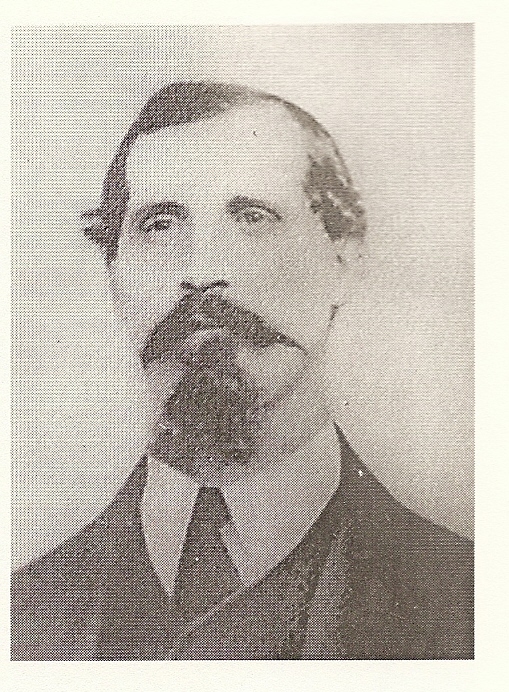
Davis was also part of the land purchase for the Knox Institute and Industrial School, a private elementary and secondary school for Black Georgians in Athens from 1868 to 1928.
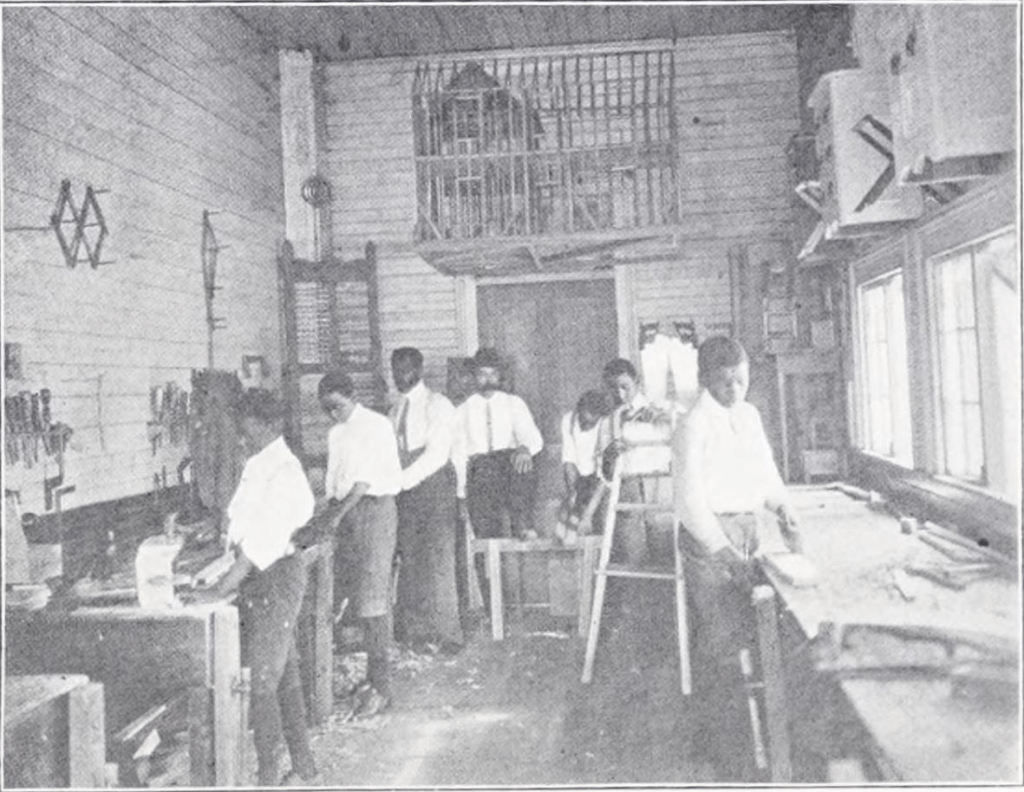
Carpentry Class at Knox Insitute. An Era of Progress and Promise, 1863–1910: The Religious, Moral, and Educational Development of the American Negro Since His Emancipation, p. 149

On Election Day in 1868, Davis and Alfred Richardson became the first Black men elected to the Georgia General Assembly from Clarke County, each winning the majority of votes in Athens. As historian and politician Michael Thurmond described the scene, “White Athenians were shocked and dismayed. Black Athenians were overwhelmed with joy.” The two men took different approaches to their legislative work. As local historian Matt Pulver noted in an NPR report by Emma Auer (June 30, 2026), Davis adopted a more cautious political style, seen as “more willing to play ball with the whites,” in contrast to Richardson’s outspoken approach.

Davis was expelled from the legislature alongside the other Original 33 Black state lawmakers in 1868, then reinstated in 1870 following federal intervention. He won back his seat and continued his legislative service, introducing several bills including one to build a new Georgia Railroad line through the city of Athens. Davis and his fellow legislators supported public schools for all children in Georgia, Black or white; advocated for the enfranchisement of white men who did not own property; and played a role in legislation seeking to enfranchise women. By 1870, census records show Davis had accumulated $700 in real estate and $100 in personal property. On January 31, 1870, while serving as a legislator, he opened an account at the Freedman’s Bank in Atlanta, listing his occupation as “Member of House Legislative.” Davis did not run for reelection in 1872, instead pursuing a career in real estate. By 1880, census records list his occupation as Merchant.

Davis remained active in the Republican Party throughout his life. By 1880, his son William H. Davis was working as a mail agent in Athens. Two years later, on February 13, 1882, Madison Davis was appointed Postmaster of Athens, becoming the first African American to hold that position in the city. He served until February 15, 1886, when he was succeeded by Wiley B. Burnett. According to the 1885 U.S. Register of Civil, Military, and Naval Service, he earned an annual compensation of $1,900 in that role.
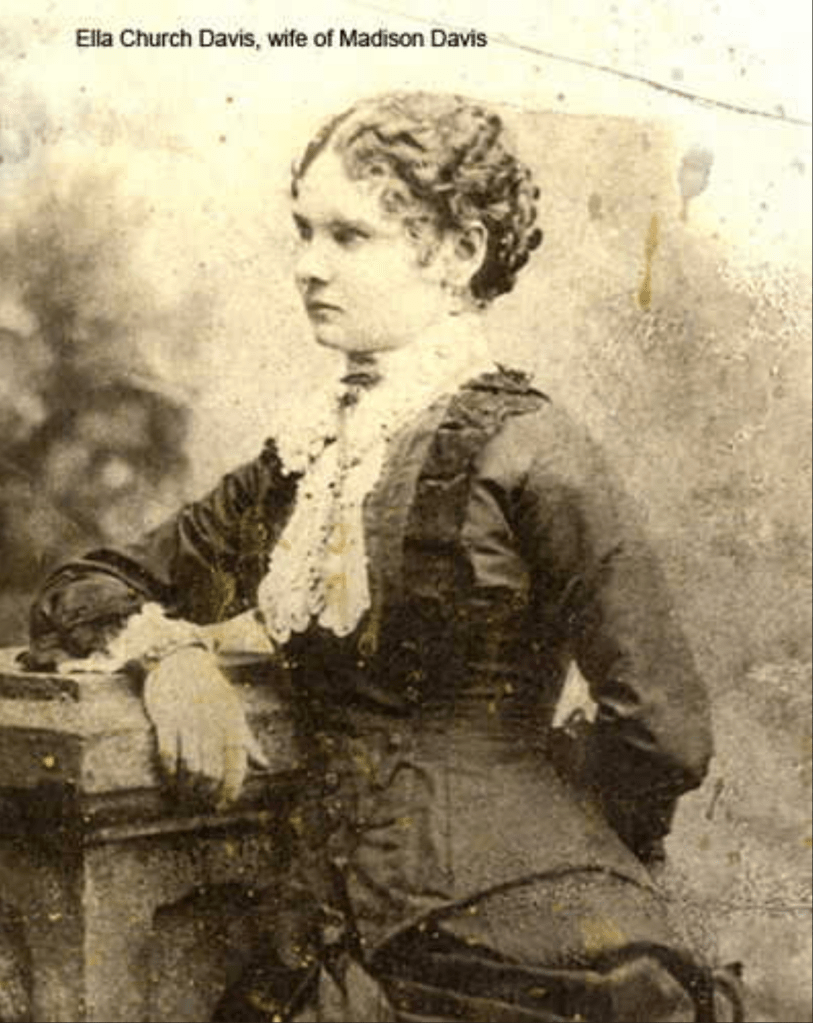
Davis continued to live in Athens with his wife Ella M. Church Davis (1840–1925) and their children on Newton Street. The 1900 census recorded them as having been married 44 years. Madison Davis died on August 20, 1902, at the age of 68. Like Alfred Richardson, he died without a will; his son James Perry Davis was appointed administrator of his estate on July 6, 1903. Davis is buried in Gospel Pilgrim Cemetery in Athens.

Historian Michael Thurmond, who in 1986 became the first Black lawmaker to represent the Athens area since Reconstruction, has said he took inspiration from both Davis and Richardson. Local activists are currently working to name Athens’ newest park after Davis and Richardson.

REFERENCES:

“27 September 1833: Legislator Madison Davis Is Born.” This Day In Athens. Athens-Clarke County Library Heritage Room. September 27, 2010. http://accheritage.blogspot.com/2010/09/27-september-1833-legislator-madison.html?m=1

https://www.findagrave.com/memorial/103060294/madison-davis

https://en.wikipedia.org/wiki/Madison_Davis

Hester, Albert Lee (2010). Enduring Legacy: Clarke County Georgia’s Ex-Slave Legislators Madison Davis and Alfred Richardson. Athens, GA: Green Berry Press.

1870 United States Federal Census, Athens, Clarke County, Georgia

1880 United States Federal Census, Athens, Clarke County, Georgia

1900 United States Federal Census, Athens, Clarke County, Georgia

U.S., Freedman’s Bank Records, 1865–1874, Account No. 85, Madison Davis

U.S., Freedmen’s Bureau Records, 1865–1878

U.S., Appointments of U.S. Postmasters, 1832–1971, Athens, Clarke County, Georgia, February 13, 1882, https://www.ancestry.com/imageviewer/collections/1932/images/30439_065407-00446?pId=1634950

U.S., Register of Civil, Military, and Naval Service, 1863–1959, 1885

Georgia, U.S., Wills and Probate Records, 1742–1992, Clarke County, July 6, 1903

Emma Auer, “America’s first Black legislators and the work to revive their legacies,” NPR/WUGA, June 30, 2026, https://www.npr.org/2026/06/30/nx-s1-5702833/americas-first-black-legislators-and-the-work-to-revive-their-legacies
Alfred Richardson-Clarke County

Alfred Richardson was born into slavery around 1836 in Walton County, Georgia, the son of Ross Richardson and Anna Richardson. He was brought to Clarke County at the age of seven, where he would spend the rest of his life. After emancipation, he worked as a carpenter and owned a tavern. A Freedman’s Bank record from 1871 lists his occupation as “House carpenter + Member of Legislature.” By 1870, census records show he had accumulated $250 in real estate and $150 in personal property.

On August 6, 1867, Richardson formally registered in Clarke County’s Election District 27, taking the oath required under Reconstruction to qualify as a voter and candidate. The following year, on Election Day in 1868, Alfred Richardson and Madison Davis became the first Black men elected to the Georgia General Assembly from Clarke County, each winning the majority of votes in Athens. As historian and politician Michael Thurmond described the scene, “White Athenians were shocked and dismayed. Black Athenians were overwhelmed with joy.” The two men took different approaches to their work. Local historian Matt Pulver characterized Davis as “more willing to play ball with the whites,” while Richardson “was having none of that. He was incredibly outspoken.”

Along with the other Original 33 Black state lawmakers, Richardson was expelled from the legislature in 1868. He was reinstated in 1870 and continued serving in the Georgia General Assembly.

Richardson and his fellow legislators supported public schools for all children in Georgia, Black or white; advocated for the enfranchisement of white men who did not own property; and played a role in legislation seeking to enfranchise women.

Richardson’s outspokenness made him a target. He survived two Ku Klux Klan attacks in the same month on his home in Watkinsville. As reported by Emma Auer for NPR (June 30, 2026), drawing on Richardson’s Senate testimony and the account of his descendant Craig Crosby, one attack began between midnight and 1 a.m., when 15 to 25 men arrived at his home. Richardson had already reinforced his door, anticipating an assault, but the men broke through with an ax. He was shot three times and returned fire, killing one of his attackers. He later learned the man had been a childhood neighbor. Despite the ongoing danger, Richardson traveled to Washington to give testimony. In 1871, he told a U.S. Senate committee that it was not safe for him to return home and that he was staying in Athens, Georgia. That same year, while sheltering in Athens, he opened an account at the Freedman’s Bank, conducting business and asserting his place in civic life even amid the threats against him. Crosby has described his ancestor’s willingness to testify as a reflection of a lifelong commitment to doing “the right thing. No matter what the situation is, you stand up for what’s right.”

Alfred Richardson died of pneumonia in 1872, leaving no will. His wife, Fannie Harden Richardson, was appointed administrator of his estate, with fellow legislator Madison Davis and Floyd Hill serving as guarantors on a bond of $1,800, recorded March 12, 1872. Despite their differing political styles, Davis stood by Richardson’s family in a concrete way after his death. Fannie Richardson also died that year, leaving behind four daughters: Ella (1860–1943), Amanda (1863–1936), Laura (1866–1929), and Althea (1871–1935). By then, both of Richardson’s parents had already passed. He was survived by his brothers Isaac and Ross, who had settled in Atlanta, and his sisters Ellen and Lucy. The story of Athens’ first Black legislators was largely lost to history for more than a century. Thurmond, who in 1986 became the first Black lawmaker to represent the Athens area since Reconstruction, has said he was unaware of Richardson and Davis until he encountered them in a master’s thesis. Local activists are currently working to name Athens’ newest park after Richardson and Davis.

Sources:
1870 United States Federal Census, Watkinsville District, Clarke County, Georgia


Georgia, U.S., Returns of Qualified Voters and Reconstruction Oath Books, 1867–1869, Alfred Richardson, Clarke County, Election Precinct 2, August 6, 1867, https://www.ancestry.com/imageviewer/collections/1857/images/32305_1220706333_0104-00261?pId=923895


Georgia, U.S., Wills and Probate Records, 1742–1992, Administration Bond for Alfred Richardson, Clarke County, March 11, 1872, https://www.ancestry.com/imageviewer/collections/8635/images/005761594_00482?pId=68005


U.S., Freedman’s Bank Records, 1865–1874, Record No. 1409, Alfred Richardson, https://www.ancestry.com/imageviewer/collections/8755/images/GAM816_6-0188?pId=185928


Emma Auer, “America’s first Black legislators and the work to revive their legacies,” NPR/WUGA, June 30, 2026, https://www.npr.org/2026/06/30/nx-s1-5702833/americas-first-black-legislators-and-the-work-to-revive-their-legacies
Jacob “Jake” Hutchings – Jones County

Jacob “Jake” Hutchings was born into slavery around 1830 or 1831. Historical sources differ on his birthplace.  The Jones County historical marker and Georgia’s HR 2093 record him as a native of Virginia, while the 1870 Census lists him as a native of South Carolina. This is likely due to the white patriarch of the Hutchings family, Robert Hutchings, being born in Virginia and later settling in Jones County. However, sources do agree that before the Civil War Jacob was enslaved by Richard Henry Hutchings, the son of Robert Hutchings. Jacob Hutchings taught himself to read and write and worked as a skilled stone mason both during and after slavery. His descendants described him as “a tall, very strong man with long arms and great stature, with a presence that was undeniable.”

Much of Hutchings’s stone masonry work can be found throughout Jones County including cemeteries, street curbs, the steps of the former Clinton courthouse, and the retaining wall at the Jones County Courthouse.  He also hand-quarried a 28-acre granite boulder field in Clinton that would later bear his name as “Jake’s Woods.”  Hutchings  acquired this quarry property during Reconstruction. 

After emancipation, Hutchings took several roles in Jones County. He worked as a teacher, minister, farmer, and owner of a small grocery store. By 1870, he owned $1,500 in real estate and $200 in personal property. Hutchings also became deeply engaged in Black political organizing. Like many others of the Original 33, he attended the Georgia Black Convention of October 1866 and became a leading political organizer in the following year. He also attended the Georgia labor convention of 1869.

In the spring of 1868, as the Original 33 were being elected to the Georgia General Assembly, Jacob Hutchings campaigned for a seat representing Jones County. He ran against a white Democrat and did not initially secure the majority of votes so his opponent was seated. But Hutchings successfully contested the election results, and with Republicans holding the majority in the assembly, he was ultimately seated as Representative for Jones County. 

The story of his journey to take his seat has been passed down through the family. As Hutchings’s decendant Kevin Brown recounted in a 2026 WABE radio piece, “The story goes that on his way to be seated he wore his tall black silk hat and he drove his horse and buggy all the way to Atlanta.” It is an image that speaks to the dignity and determination that Jacob Hutchings demonstrated in claiming his rightful place in the Georgia General Assembly.

As author Carolyn White Williams noted in her 1957 History of Jones County: 1807-1907, “The Republicans being in the majority … seated Jake as Representative of Jones County. This is the only time that Jones County was ever represented by a Negro.” Hutchings continued his legislative service in the state House of Representatives in 1871. Though not formally counted among the Original 33, Hutchings was in fact the 34th Black member of the Georgia General Assembly elected in 1868: the “Original 33 Plus One,” as Georgia Representative Carl Gilliard would later call him.

Hutchings’s influence during the Reconstruction period extended beyond his legislative work. Democrats in Jones County themselves attributed the fact that there had been “no serious collision” of the races during Reconstruction to the steadying influence of the Black assemblyman.

Jacob Hutchings and his wife Emily (listed in the 1870 census as born in Georgia in 1833)  had two children: Julius Hutchings (1852–1918), Emma Mae Hutchings (born 1855.) In the 1880 census, Julius is listed as living with his parents and working as a school teacher. Jacob Hutchings died in June of 1909. His legacy has endured through both his descendants and the land he worked. The Hutchings family stewarded Jake’s Woods for generations until, in June 2022, they worked with The Conservation Fund and Jones County to see the 28-acre property permanently protected. Jones County officially acquired the site in February 2023, and it opened as a public park in 2024, offering rock climbing, bouldering, and greenspace to the community. “The granite blocks that Jacob quarried for these woods can be found all over the county, including at cemeteries, street curbs and even the steps of the former Clinton courthouse,” said Florence Walker, Hutchings’s great-great-granddaughter. A historical marker honoring Jacob Hutchings was placed in Jones County in 2007. His descendants, including Cynthia Phillips and Kevin Brown, continue to advocate for a fuller memorial to honor his place in Georgia history.

Although Hutchings was elected to the Georgia General Assembly in 1868 alongside the Original 33, he was not formally included in that count because his seat came through a contested election rather than a straightforward victory. His opponent was initially seated before Republicans in the majority moved to unseat him and place Hutchings as the rightful representative of Jones County. For over 150 years, that distinction kept his name off the list. It was descendants Cynthia Phillips and Kevin Brown who brought their ancestor’s story to Georgia Representative Carl Gilliard, who confirmed that Hutchings had in fact been seated following the 1868 elections and began championing his inclusion, calling the group the “Original 33 Plus One.” That advocacy resulted in the Georgia House of Representatives passing House Resolution 2093 on April 2, 2026, which formally recognizes and commends Hutchings. Efforts continue to ensure he is represented alongside the Original 33 in the planned monument at the Georgia State Capitol.


Sources:

Jones County History and Heritage, Inc., “Jacob Jake Hutchings,” https://www.jonescountyhistoryandheritage.com/jacob_jake_hutchings

DorMiya Vance, “‘I claim the rights of a man’: The story of Georgia’s Original 33 Black legislators,” WABE, June 19, 2026, https://www.wabe.org/the-story-of-georgias-original-33-black-legislators/

Val Keefer, “Jake’s Woods Acquired by Jones County,” Morning Ag Clips, February 21, 2023, https://www.morningagclips.com/jakes-woods-acquired-by-jones-county/

Georgia House Resolution 2093, 26 LC 129 1541, https://www.legis.ga.gov/legislation/74706

Carolyn White Williams, History of Jones County: 1807-1907 (1957)

Eric Foner, Freedom’s Lawmakers: A Directory of Black Officeholders during Reconstruction, Revised Edition

Edmund L. Drago, Black Politicians & Reconstruction in Georgia: A Splendid Failure

Friends of Jones County Cemeteries, “About Jones County Cemeteries,” http://www.friendsofcems.org/jones/default1.htm

Brian Brown, “Hutchings-Carr House, 1810-1811, Clinton,” Vanishing Georgia, April 26, 2021, https://vanishinggeorgia.com/2021/04/26/hutchings-carr-house-circa-1811-clinton/

Historical Marker Dedication: Representative Abram Colby

The Georgia Historical Society will be dedicating a historical marker for Abram Colby on April, 26, 2026. For more information, please visit their website.

The marker will read:

Representative Abram Colby (c.1820-1872)

African-American leader Abram Colby represented Greene County’s Black community following emancipation. Under the US Southern Homestead Act (1866), Colby unsuccessfully applied for land in Arkansas to relocate Greene County African-American citizens. Colby later advocated for Black education and fair labor contracts. Elected a Republican state representative in 1868, Colby and his fellow Black legislators were expelled because of their race. The Ku Klux Klan (KKK) targeted Republicans who supported Reconstruction and assaulted Colby in a near-fatal attack. In White v. Clements (1869), the Georgia Supreme Court affirmed African Americans’ right to hold political office, reinstating Colby’s seat. In 1871 Colby testified about the KKK’s political terrorism in the South before a federal congressional committee, leading to the prosecution of KKK members and shifting public perception. Colby was targeted until his death in 1872.

Erected by the Georgia Historical Society and the Greene County African American Museum

Rep. Carl Gilliard Urges Descendants of the Original 33 to Contact His Office

PRESS RELEASE

FOR IMMEDIATE RELEASE:

Contact: Betsy Theroux

Tuesday, April 22, 2025

(404) 656-3996

betsy.theroux@house.ga.gov

Kehl Mackesey

(404) 656-7589

kehl.mackesey@house.ga.gov

Rep. Carl Gilliard Urges Descendants of the Original 33 to Contact His Office

ATLANTA – State Representative Carl Gilliard (D-Savannah) urges descendants of the Original 33 to contact his office. 

“Since the introduction and passage of HB 303, the Original 33 Memorial Act, we have heard from more relatives of the Original 33, and we want to ensure that we are able to reach out to every family member who would like to be involved in the process of memorializing these great men,” said Rep. Gilliard. “It is essential that we properly honor these courageous men and preserve the legacy of their sacrifice and services right here at the Georgia State Capitol.”

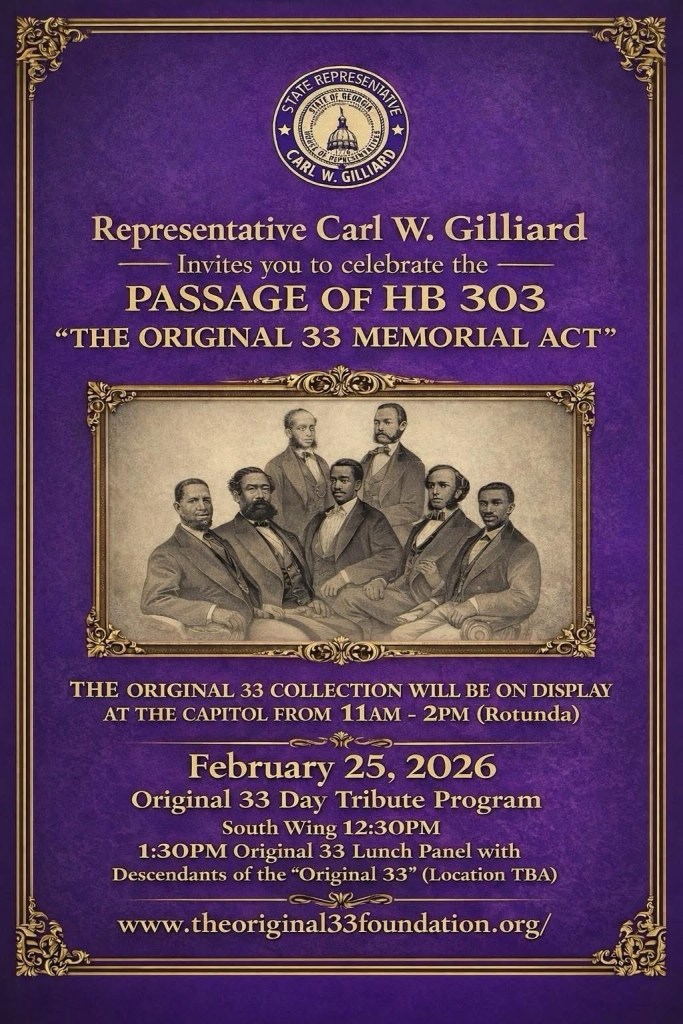
Rep. Gilliard requests that family members of the Original 33, Black legislators who were elected to the Georgia General Assembly in 1868 and expelled after Reconstruction, contact his office to provide input and participate in forthcoming memorial events. The Original 33’s names are listed as follows:

Senators Aaron Alpeoria Bradley; Tunis Campbell, Sr.; and George Wallace; and Representatives Thomas M. Allen; Eli Barnes; Thomas Beard; Edwin Belcher; Tunis Campbell, Jr.; Malcolm Claiborn; George H. Clower; Abram Colby; John T. Costin; Madison Davis; Monday Floyd; F. H. Fyall; Samuel Gardner; William A. Golden; William Guilford; William Henry Harrison; Ulysses L. Houston; Philip Joiner; George Linder; Robert Lumpkin; Romulus Moore; Peter O’Neal; James Ward Porter; Alfred Richardson; James M. Simms; Abraham Smith; Alexander Stone; Henry McNeal Turner; John Warren; Samuel Williams; and Jacob P. Hutchings.

House Bill 303, legislation Rep. Gilliard sponsored during the 2025 legislative session, would create the Original 33 Memorial Act. HB 303 received bipartisan support and passed both the House and Senate unanimously. The bill would allow for a monument, subject to the availability of private funds, honoring the Original 33, the Black legislators expelled from the General Assembly after the end of Reconstruction, to be placed on State Capitol grounds or in another prominent place.

The full text of HB 303 may be found here. To contact Rep. Gilliard, please call (912) 436-5325. 

Representative Carl Gilliard represents the citizens of District 162, which includes a portion of Chatham County. He was first elected to the House of Representatives in 2016 and currently serves as Secretary of the Creative Arts & Entertainment. He also serves on the Appropriations Subcommittee on Economic Development, Insurance, Natural Resources & Environment, Reapportionment and Redistricting and Transportation committees.

Researcher Dives Into the Past of Abram Colby

Historian Greer Brigham has been researching the life of Abram Colby, one of The Original 33. Please take a moment to read his article on the website, Scalawag. With some Original 33 members, their stories have been hard to find. Brigham’s work unravels the story of Greene County’s Colby.

*Please note that the header image is not of Abram Colby but is part of the Farm Security Administration/Office of War Information photo archive. Dorothea Lange took this photo in 1937 when she visited GreenE County and documented life there.